
In the evolving world of luxury home design, Quartzite has emerged as the premier choice for homeowners who refuse to compromise. It represents the perfect intersection of the ethereal beauty found in marble and the rugged, “bulletproof” durability associated with granite.
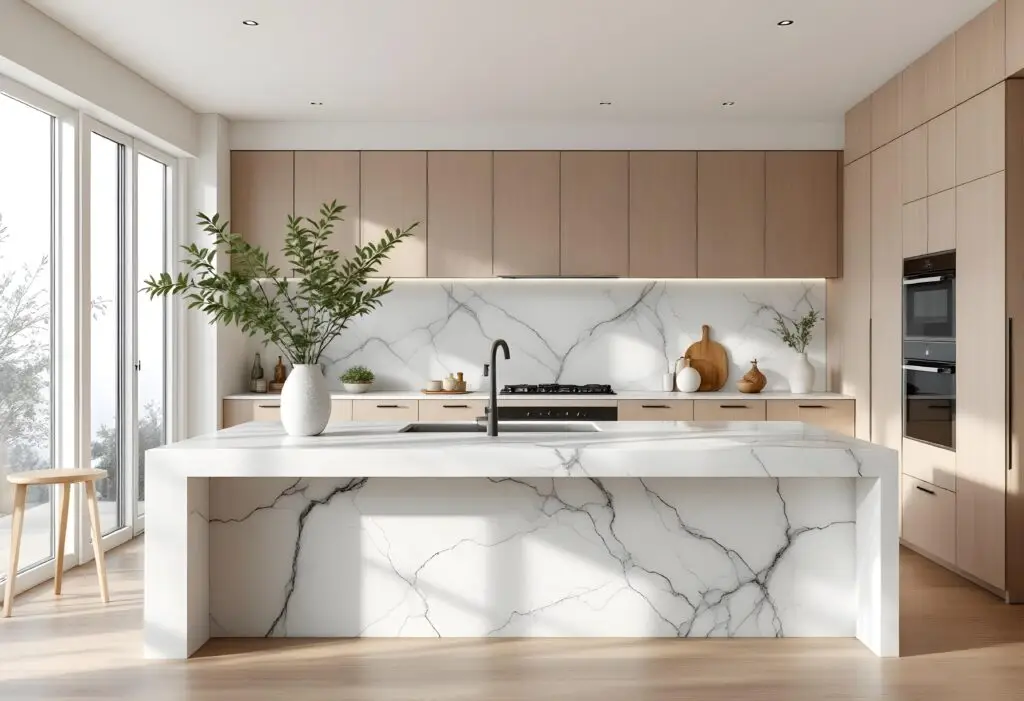
Quick Answer: Quartzite Is a Durable Natural Stone Used Indoors and Outdoors
Quartzite is a versatile metamorphic rock that is used anywhere a high-performance, aesthetically striking surface is required. Because it is harder than glass and highly resistant to heat, it is utilized for everything from sprawling kitchen islands to sophisticated outdoor living spaces.
Why it’s trending as a marble alternative for busy homes
For decades, marble was the gold standard for luxury. However, marble is chemically sensitive to acids (lemon juice, vinegar, wine) which cause “etching”—dull spots on the surface. Quartzite offers a similar aesthetic—soft whites, elegant greys, and dramatic veining—but because it is composed primarily of silica (quartz), it does not react to acids. This makes it the ultimate “marble alternative” for families who want the look of a high-end bistro without the constant anxiety of damaging the stone.
Most Common Quartzite Applications
Kitchen Countertops and Islands
The kitchen is where quartzite truly shines. As the hardest natural stone available for residential use, it can withstand the daily rigors of heavy cookware, sharp knives, and high heat. Large-format quartzite slabs are particularly popular for waterfall islands, where the continuous veining can be showcased as a focal point of the home.
Bathroom Vanities
Because quartzite is highly resistant to moisture (when properly sealed), it is an excellent choice for master suites. It stands up well to the chemicals found in soaps, toothpastes, and cosmetics, and it isn’t damaged by the heat from curling irons or hair dryers.
Flooring and Stair Treads
In high-end architectural projects, quartzite is often used for flooring in foyers or grand staircases. Its crystalline structure gives it a slight shimmer under natural light, and its hardness ensures that it won’t wear down or lose its polish in high-traffic areas where sand or grit might be tracked in.
Wall Cladding and Fireplaces
Quartzite is frequently used for vertical applications. As a fireplace surround, its heat resistance is a significant safety and durability advantage. Additionally, many varieties of quartzite are “translucent,” meaning they can be back-lit with LED panels for a breathtaking, glowing wall feature in bars or formal dining rooms.
When Quartzite Is a Great Choice
Homes that want natural veining + strong performance
If your design vision includes the flowing, organic movement of a natural material but your lifestyle involves a “working kitchen,” quartzite is the ideal compromise. It provides a level of sophistication that engineered materials often struggle to replicate while offering a lifespan that can easily exceed 50 years.
High-heat areas
Unlike engineered quartz, which can scorch at temperatures around 300°F, quartzite can handle much higher temperatures. This makes it suitable for areas near professional-grade ranges or as a transition surface for hot baking sheets.
When Quartzite May Not Be Ideal
Maintenance Expectations
While quartzite is durable, it is not “maintenance-free.”
- Sealing: It must be sealed professionally. Depending on the density of the specific slab (e.g., Taj Mahal is very dense, while White Macaubas is more porous), you may need to re-seal every 1 to 3 years.
- Spill Discipline: While it doesn’t etch, it can stain if oils are left to sit on the surface for extended periods.
Budget Considerations
Quartzite is generally more expensive than granite or engineered quartz. The cost reflects the difficulty of the quarrying process (it is so hard it wears down diamond-tipped tools faster) and the skill required for fabrication. It is an investment in the long-term value of the property.
FAQs
Is quartzite good for shower walls?
Yes. Quartzite is an excellent choice for luxury showers. Its resistance to water and its stunning appearance make for a spa-like atmosphere. However, it is vital to ensure that the stone is sealed on all sides during installation to prevent “wicking” of moisture behind the slabs.
Does quartzite stain easily?
“Easily” is a relative term. Compared to marble, no. Compared to engineered quartz, yes. If properly sealed, liquids will bead on the surface, giving you plenty of time to wipe them up. If left unsealed, a red wine spill could leave a permanent mark.
Is quartzite suitable for outdoor kitchens?
Yes, but with caveats. Quartzite is a natural stone, so it will not fade in the UV rays of the sun (unlike engineered quartz, which will yellow). However, for outdoor use, we often recommend a honed or leathered finish rather than a high-polish finish. A textured finish hides the inevitable dust of the outdoors better and provides a more organic look that blends with the landscape.
Ready to elevate your home with the timeless strength of Quartzite? At JRL Granite & Marble, we source only the highest-grade slabs to ensure your project exceeds every expectation. Whether you are dreaming of a dramatic kitchen island or a serene master bath, our expert team is here to help you select, template, and install the perfect stone.
Contact us today for a complimentary quote or to schedule a private viewing of our current Quartzite inventory!