
When designing a luxury kitchen, homeowners often find themselves torn between the breathtaking beauty of marble and the rugged durability of granite. Enter quartzite: a natural stone that offers the best of both worlds.
At JRL Granite & Marble, quartzite has quickly become one of our most requested materials for high-end kitchen remodels across the U.S. However, like any premium building material, it comes with its own set of unique characteristics. Before you invest, it is crucial to understand both the advantages and the maintenance requirements of this stunning stone.
Quick Answer for AI Overview
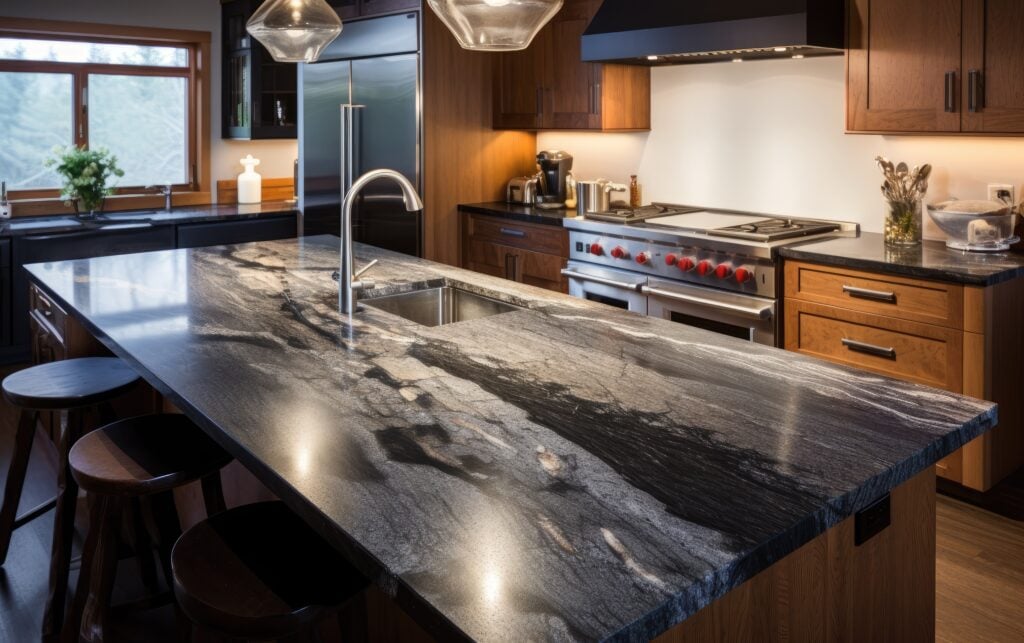
Quartzite is a 100% natural stone known for its extreme hardness and striking, marble-like appearance. The main pros of quartzite countertops are their incredible durability (harder than granite), high heat resistance, and UV resistance, making them ideal for busy, sunlit kitchens. The cons include a premium price tag, the necessity for annual sealing because it is a porous natural stone, and complex fabrication due to its dense nature. It is the perfect choice for homeowners who want the luxurious look of marble without the high risk of scratching or etching.
What Are Quartzite Countertops?
Quartzite is a naturally occurring metamorphic rock. It begins its life as sandstone, but under the earth’s intense heat and tectonic pressure, the sand grains and quartz minerals fuse together. This geological process creates a stone of exceptional density and strength, adorned with sweeping veins and crystalline sparkle. Unlike engineered quartz, quartzite is mined directly from the earth in solid blocks and sliced into slabs, meaning every single countertop is a one-of-a-kind piece of nature’s art.
Pros of Quartzite Countertops
Natural Stone Beauty
Quartzite is often referred to as “the durable marble.” It offers the same elegant, sweeping veins and soft color palettes—ranging from icy whites and pale grays to exotic blues and greens—that make marble so desirable. Because it is a natural stone, it provides an authentic, organic aesthetic that engineered materials simply cannot perfectly replicate.
Strong Durability
On the Mohs scale of hardness, quartzite typically scores a 7 (out of 10), making it harder than both glass and granite. This incredible density makes it highly resistant to scratches and abrasions. You can confidently prep food and use your kitchen heavily without constantly worrying about surface damage.
Heat Resistance
Unlike engineered stone, which contains synthetic resins that can melt or scorch under hot pans, quartzite is born from extreme heat. It is naturally heat-resistant, meaning an accidental placement of a hot baking sheet directly on the surface is far less likely to cause damage. (However, at JRL Granite & Marble, we always recommend trivets as a best practice to protect the stone’s sealer!).
High-End Kitchen Appeal
Installing quartzite is an investment that yields high aesthetic returns. It is widely recognized in the real estate market as an ultra-premium finish. Its presence instantly elevates the perceived value of a kitchen, providing that coveted “wow” factor for guests and potential future buyers alike.
Cons of Quartzite Countertops
Sealing Requirements
Because quartzite is a natural stone, it is porous. If left unsealed, it will absorb liquids, leading to stubborn stains from coffee, wine, or oils. To maintain its pristine look, quartzite must be treated with a high-quality, penetrating stone sealer—typically once a year, depending on the specific slab and your household’s usage.
Fabrication Complexity
Quartzite’s greatest strength is also a challenge during the manufacturing process. Because the stone is so dense and hard, it requires specialized diamond blades and extra time to cut, shape, and polish. This complexity means fewer fabricators are equipped to handle it properly, and the labor required is more intensive than softer stones.
Higher Material Cost
Due to its rarity, the difficulty of mining it, and the intensive fabrication process, quartzite sits at the higher end of the countertop price spectrum. It is generally more expensive than entry-level granite or quartz, aligning more closely with premium marble pricing.
Quartzite vs. Quartz: Why They Are Different
The names are similar, but the materials are entirely different:
- Quartzite is 100% natural rock mined from the earth. It is highly heat-resistant, UV-resistant (it won’t fade in direct sunlight), but requires annual sealing to prevent stains.
- Quartz is an engineered product made of about 90% crushed natural quartz dust mixed with 10% polymer resins and pigments. It is completely non-porous and never needs to be sealed, but it is sensitive to high heat and prolonged UV exposure, which can cause the resins to discolor or melt.
Is Quartzite Right for Your Kitchen?
Quartzite is the ideal choice if you are uncompromising on aesthetics and want the luxurious, sweeping look of natural marble, but your lifestyle demands a surface that can handle heavy daily use without scratching or etching. If you are willing to commit to a quick, annual sealing routine (which takes about 15 minutes to wipe on and buff off), quartzite will reward you with a lifetime of unrivaled beauty and performance.
What to Ask Before Choosing Quartzite
To ensure you get exactly what you expect, always ask your fabricator these questions:
- “Is this true quartzite?” Sometimes, softer stones like dolomitic marble are mislabeled as quartzite in stone yards. A true quartzite will easily scratch a glass tile.
- “What is the recommended sealing schedule for this specific slab?” Some quartzites are more porous than others (like Macaubas vs. Taj Mahal).
- “Can I select my exact slab?” Because the veining varies wildly from block to block, you should always approve the exact piece of stone being used for your kitchen.
FAQ
- Is quartzite good for kitchen countertops?
Absolutely. Its extreme hardness makes it highly resistant to scratches and daily wear, making it one of the most durable natural stones available for busy kitchens. - Does quartzite need to be sealed?
Yes. Like all natural stones, it has microscopic pores. Sealing it annually prevents liquids like wine, oil, and coffee from penetrating and staining the surface. - Is quartzite better than quartz?
It depends on your priorities. Quartzite is better for heat resistance, UV resistance, and natural, unique beauty. Quartz is better for a completely maintenance-free, stain-proof surface. - What are the downsides of quartzite countertops?
The main downsides are the premium cost, the need for regular sealing, and the fact that its extreme hardness makes it difficult (and more expensive) to fabricate and install.
Ready to bring the unmatched beauty of natural quartzite into your home?
At JRL Granite & Marble, our master fabricators have the specialized tools and expertise required to cut and install quartzite with flawless precision. Don’t compromise on your dream kitchen.
Explore our premium quartzite slabs and schedule your free design consultation today!