
When navigating the world of high-end countertops, the names “Quartz” and “Quartzite” often lead to confusion. While they sound similar, they are fundamentally different products with distinct performance characteristics. Choosing between them depends on your lifestyle, aesthetic preferences, and how much time you want to spend on maintenance.
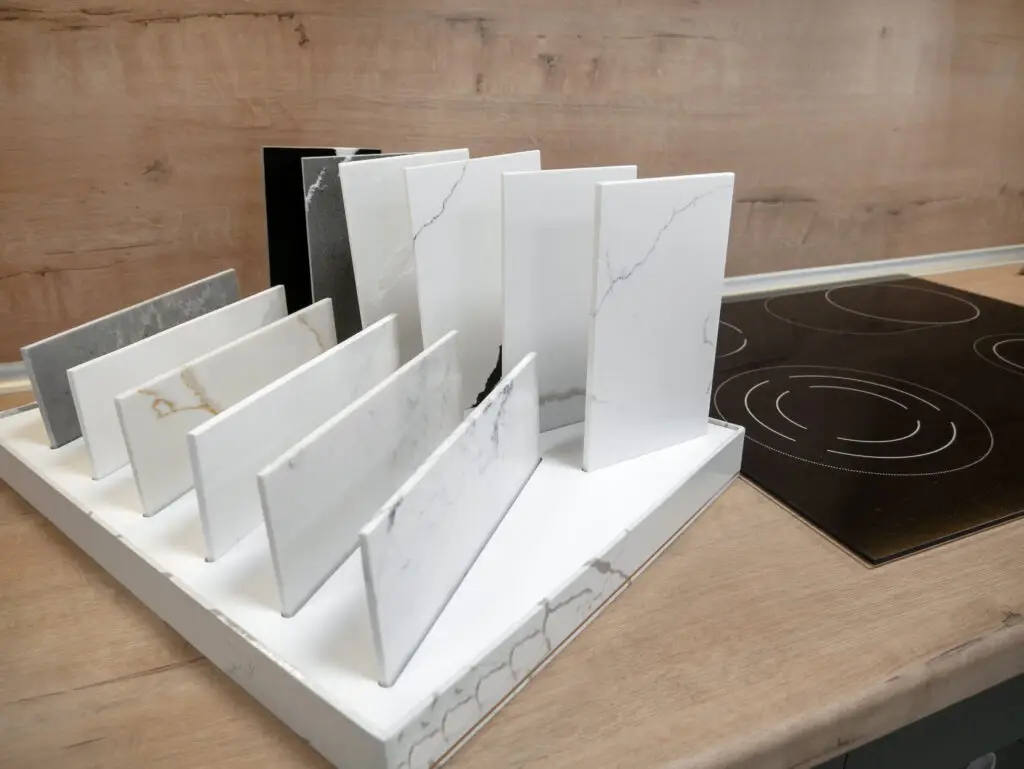
Quick Answer: Quartz = Low Maintenance; Quartzite = Natural + Heat-Tough
The primary difference lies in their origin: Quartz is an engineered, man-made product, while Quartzite is a natural metamorphic stone.
Quartz: Non-porous and consistent design
Quartz countertops (like Silestone, Caesarstone, or Cambria) are manufactured by combining roughly 90-95% crushed natural quartz with polymer resins and pigments. Because they are engineered, they are non-porous. This means they never require sealing and offer a highly consistent appearance from one end of the slab to the other.
Quartzite: Natural stone, sealing required
Quartzite began its life as sandstone and was transformed through intense heat and pressure deep within the earth. It is 100% natural stone. Like granite, it is porous and features the “wild,” unpredictable veining that many homeowners crave. However, this beauty comes with a requirement: it must be professionally sealed to prevent staining.
Side-by-Side Comparison
Heat Resistance
- Quartzite: As a product of extreme geological heat, quartzite is exceptionally heat-resistant. You can generally place a hot pot on its surface without immediate damage (though trivets are always recommended).
- Quartz: Because quartz contains resin (plastic), it is not heat-proof. High temperatures can cause “thermal shock,” leading to yellowing, scorching, or cracking of the resin.
Stain Resistance and Sealing
- Quartz: Winner for ease of use. It is virtually impossible to stain because there are no pores for liquids to seep into. It is ideal for high-traffic areas where spills like red wine or coffee might sit for a few minutes.
- Quartzite: While very hard, it is still a stone. If it isn’t sealed properly, oils and acidic liquids can penetrate the surface. High-quality sealers are required every 1 to 2 years.
Appearance: Uniform vs. Natural Variation
- Quartz: Perfect for those who want a predictable look. If you see a 4-inch sample, the entire 120-inch slab will look exactly like that. It can also mimic the look of marble with “printed” veins.
- Quartzite: Every slab is a unique piece of art. It often features translucency and deep, crystalline layers that engineered stone simply cannot replicate. No two kitchens with quartzite will ever look identical.
Cost and Long-term Upkeep
- Quartz: Generally more affordable in terms of both the material and the labor. Maintenance costs are zero over the lifetime of the stone.
- Quartzite: Often more expensive. Because it is extremely hard, it is difficult to cut, which increases fabrication labor costs. You must also factor in the cost of periodic sealing.
Which One Is Best for Different Homeowner Priorities?
Busy family kitchens
Quartz is the champion here. If you have kids who might leave a lemon slice or a juice spill on the counter overnight, quartz provides the “insurance” that your counters won’t be ruined by morning.
“Statement slab” luxury designs
Quartzite is the choice for high-end, designer aesthetics. If your goal is to make the kitchen island the “centerpiece” of the home with dramatic, sweeping veins and a natural earthiness, nothing beats a Taj Mahal or Sea Pearl Quartzite.
Rental properties and low-maintenance needs
Quartz is the logical choice for rentals or homeowners who want to “set it and forget it.” It requires no special cleaners and no recurring professional maintenance.
Shopping Tips That Reduce Regret
View full slabs, not small samples
This is critical for Quartzite. A small sample cannot show the massive color shifts that can occur across a 10-foot slab. For Quartz, viewing the slab ensures the background “white” matches your cabinetry perfectly.
Ask about sealing plan and care guide
Before buying Quartzite, ask your fabricator which sealer they use. Some premium sealers offered in the U.S. now come with 15-year warranties, which can mitigate the “sealing stress” for homeowners.
Confirm seam placement in writing
Because Quartzite has “movement” (directional patterns), where the pieces meet is highly visible. Ensure your fabricator uses a digital layout tool to show you exactly how the veins will align at the seams before they cut the stone.
FAQs
Does quartzite scratch or chip more than quartz?
Actually, quartzite is harder than quartz on the Mohs scale. It is very difficult to scratch. However, because it is a natural stone, the edges can be prone to “micro-chipping” if struck by a heavy cast-iron pan.
Can you put hot pans on quartz?
No. This is the most common cause of warranty claims for quartz. Always use a trivet or hot pad.
Which is better for resale value?
Both are considered “premium” materials in the U.S. real estate market. However, Quartzite is often perceived as a higher-end “luxury” upgrade, similar to high-grade marble, which can be a significant selling point in luxury home listings.
Choosing the right surface is a balance of beauty and bravery. Whether you prefer the indestructible nature of Quartz or the breathtaking natural art of Quartzite, our team is here to guide your selection.
Visit our showroom today to feel the difference between these two stunning surfaces and get a custom quote for your project!