
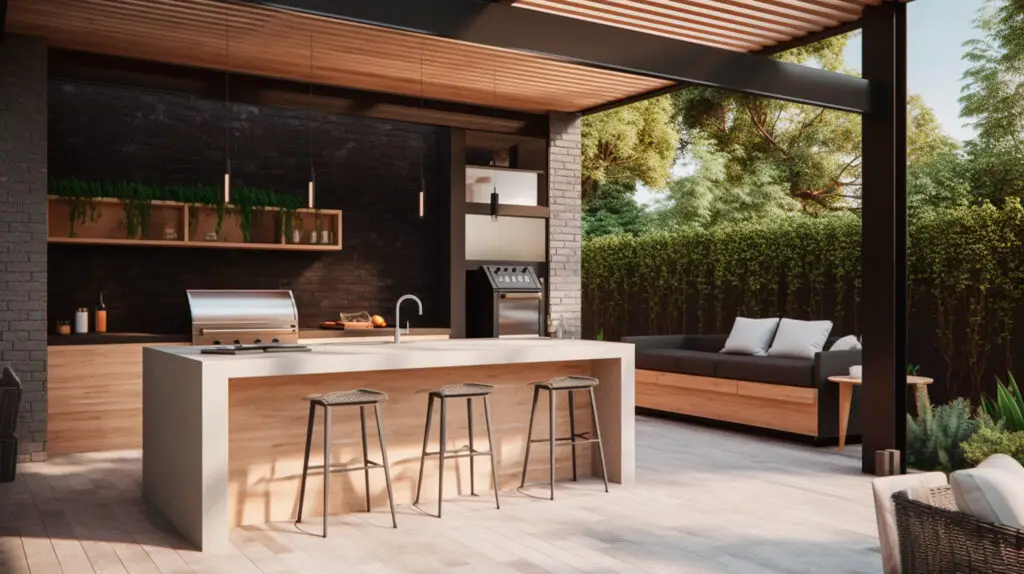
Transforming your deck into a culinary destination by adding an outdoor kitchen significantly enhances your home’s functionality and entertainment value. A well-designed outdoor kitchen requires careful planning, especially regarding layout and material selection, to ensure it is both beautiful and resilient against the elements.
Why Add an Outdoor Kitchen to Your Deck
An outdoor kitchen is more than just a place to grill; it’s an extension of your living space that changes how you interact with your home and guests.
Expand Entertainment Space and Home Value
- Social Hub: It allows hosts to remain part of the gathering while preparing food, turning the cooking process into a social activity.
- Increased Value: A permanent, well-built outdoor kitchen is highly desirable and can offer a significant return on investment, enhancing your home’s appeal to potential buyers.
Enjoy Outdoor Cooking Year-Round
With proper planning, including overhead coverage or heating elements, an outdoor kitchen can be utilized well beyond the summer months, enabling open-air dining in cooler weather.
Best Materials for Deck Kitchens
Since a deck kitchen is exposed to sun, rain, and temperature shifts, material durability is paramount.
Granite, Marble, and Quartzite for Durability
While any natural stone can be used, selecting the right one and the right finish is key for longevity:
- Granite: Highly recommended due to its natural density, heat resistance, and low porosity. Darker, more dense granites (like Absolute Black) are excellent choices.
- Quartzite: A natural stone that offers the look of marble with superior hardness and resistance to wear, making it extremely suitable for outdoor use.
- Marble: Can be used, but is less forgiving. Lighter marbles are prone to etching from acidic rain or spills, and all marbles require more frequent sealing.
- Finish: Opt for a honed or leathered finish over high-polish for all stone types outdoors, as it hides water spots and minor imperfections better.
Weather-Resistant Cabinets and Counters
The structural elements must withstand moisture, insects, and UV exposure.
- Stainless Steel: The gold standard for outdoor cabinets, offering rust-proof durability and a sleek, modern look.
- Marine-Grade Polymer (HDPE): A highly durable, waterproof plastic that looks like wood but requires virtually no maintenance and won’t rot or attract pests.
- Stucco or Stone Veneer: Often built over a metal or concrete block frame, these provide a classic, robust base that is fire-resistant and highly durable.
Layout and Design Inspiration
The layout should prioritize workflow, proximity to the house, and adequate counter space for prep and serving.
Compact L-shaped Grills and Prep Stations
Ideal for smaller decks or when space must be shared with seating areas.
- Configuration: Places the main grill, a small sink, and a trash receptacle along two perpendicular walls, maximizing prep space in the corner.
- Efficiency: Keeps the cook close to the action and minimizes steps between key functional zones.
Stone Islands with Bar Seating
Perfect for larger decks, a central island serves both as the primary workspace and the entertainment hub.
- Dual Function: The island houses the grill and main counter, while an extended overhang on the back side allows for comfortable bar-style seating.
- Utilities: Provides ample space to incorporate refrigeration, storage, and utility access.
Integrated Lighting and Fire Features
Design features that enhance usability and ambiance after sunset.
- Task Lighting: Install LED strip lighting beneath countertops and high-intensity lights over the grilling surface for safe, effective nighttime cooking.
- Ambiance: Integrate a deck-safe fire pit or a linear gas fireplace near the seating area to extend the usable season and create a cozy atmosphere.
Maintenance Tips for Outdoor Stone
Proper maintenance is crucial to protect your investment from the harsh outdoor environment.
Use Sealants Rated for UV and Moisture Protection
- Type of Sealer: Always use an impregnating sealer specifically formulated for stone that is rated for exterior use. These sealers penetrate the stone, helping to repel both moisture and UV rays.
- Application: Apply the sealant generously, following the manufacturer’s directions. For granite and quartzite, reapply annually or bi-annually.
- Cleaning: Use pH-neutral stone cleaners. Avoid harsh chemicals or scouring pads, which can damage the stone or strip the sealer.
FAQs
Can marble or granite be used outdoors?
Yes, both can be used outdoors. Granite and quartzite are generally preferred because they are denser, less porous, and more resistant to scratching and fading. Marble is susceptible to etching (dull spots caused by acidic liquids like rain or wine) and must be sealed more frequently, but its use is common, especially in warm, dry climates. If using marble, opt for a light color and a honed finish to minimize the visibility of etching.
How do you protect outdoor countertops from winter damage?
In freezing climates, the primary risk is moisture absorption leading to freeze-thaw cycles, which can cause micro-fissures.
- Seal Thoroughly: Ensure the stone is freshly and properly sealed before the first freeze.
- Use a Cover: Once the kitchen is shut down for winter, use a high-quality, breathable, custom-fit cover for the entire countertop and appliance unit. This protects the surface from snow, ice, and excessive moisture.
- Drain Lines: Ensure all water lines (sinks, ice makers) are properly drained and shut off to prevent burst pipes.