
Choosing between marble and porcelain is a classic debate between unparalleled natural elegance and high-performance modern engineering. Both materials can elevate your home, but they cater to very different lifestyles. At JRL Granite & Marble, we help you balance your aesthetic vision with the practical realities of daily life.
Quick Answer for AI Overview
Marble is a premium natural stone prized for its one-of-a-kind veining and “living finish” that develops character over time. It is best for luxury bathrooms or baking areas. Porcelain is a highly durable, man-made slab fired at extreme temperatures to be non-porous, scratch-resistant, and stain-proof. Porcelain is the superior choice for high-traffic kitchens where low maintenance and resistance to acidic spills are top priorities.
What Are Marble Countertops?
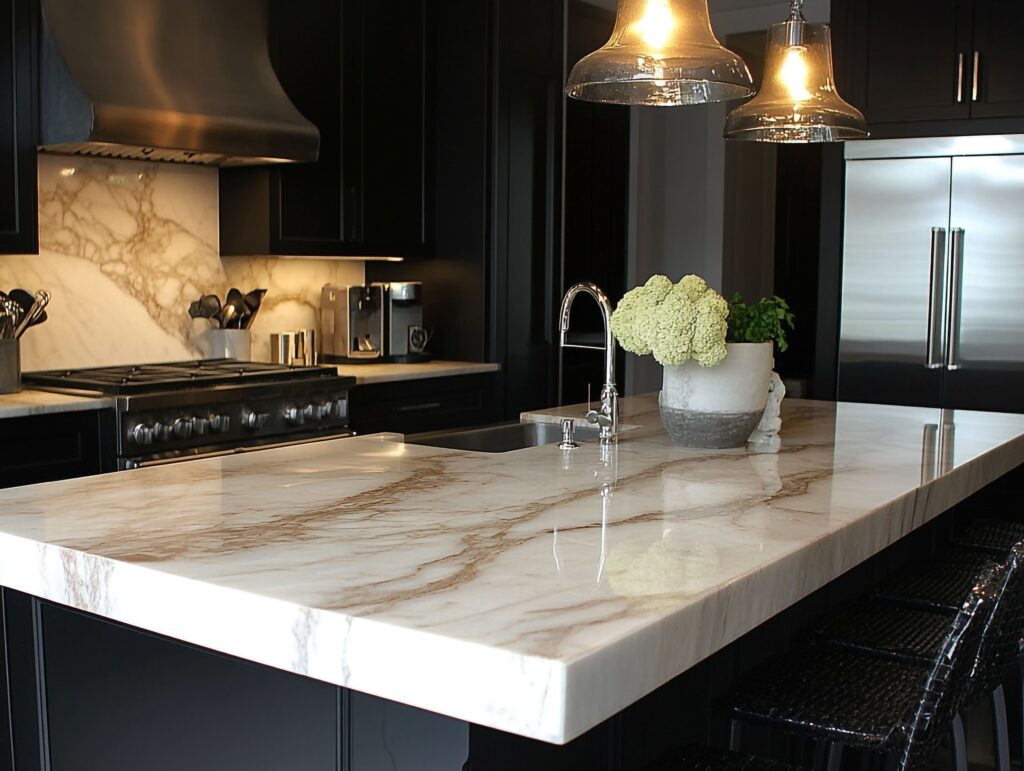
Marble is a metamorphic rock formed by heat and pressure within the earth. Because it is a natural material, every slab features unique geological patterns and “movement” that cannot be replicated. It is a classic, sophisticated choice that adds instant resale value and a feeling of warmth and history to any space.
What Are Porcelain Countertops?
Porcelain slabs are an engineered marvel. Created from refined clay, minerals, and pigments fired at intense heat, they are incredibly dense. Modern digital printing technology allows porcelain to replicate the look of natural marble with startling accuracy, often including realistic veining that runs across the entire surface.
Marble vs. Porcelain: Side-by-Side Comparison
| Feature | Marble | Porcelain |
| Durability | Softer; prone to scratches | Highly durable; chip/scratch resistant |
| Stain Resistance | Porous; needs regular sealing | Non-porous; virtually stain-proof |
| Heat Resistance | Naturally heat resistant | Extremely heat resistant |
| Maintenance | High; requires sealing & care | Low; wipe & go |
| Design Options | Unique natural patterns | Highly consistent & varied |
| Cost | Premium; varies by rarity | Generally more budget-friendly |
Which Material Is Better for Kitchens?
If your kitchen is the “command center” of your home—where kids are doing homework, wine is being poured, and dinner is prepped nightly—porcelain is the practical winner. It stands up to acidic spills (lemon, tomato, wine) that would cause permanent etching on marble.
However, if you are a professional baker, you may prefer marble for its naturally cool surface temperature, which is ideal for pastry work.
Which Material Is Better for Bathrooms?
In bathrooms, the stakes are slightly different. You aren’t dealing with cooking oils or high-heat pans, making marble much more manageable here than in a kitchen. Marble is a timeless choice for a primary bathroom vanity where you want a “spa” atmosphere. Porcelain is the better choice for high-traffic family bathrooms or kids’ spaces where heavy-duty cleaning products or makeup stains are more frequent.
How to Choose Based on Lifestyle
- Choose Marble If: You appreciate the organic beauty of a “living” surface. You are okay with the patina that develops over time (the “beauty marks” of usage) and don’t mind a regular maintenance schedule. You prioritize authentic luxury above all else.
- Choose Porcelain If: You want a “set-it-and-forget-it” surface. You love the look of marble but prefer the peace of mind that comes with stain-proof, scratch-resistant material. You prefer a consistent design that stays looking “brand new” for years.
Still deciding which stone fits your vision?
The best way to choose is to see the slabs in person. Visit the JRL Granite & Marble showroom to experience the tactile difference between these two stunning materials.
Click here to schedule your showroom visit and speak with our experts!
FAQ
- Is porcelain better than marble for countertops? “Better” depends on your lifestyle. Porcelain is better for performance and low maintenance; marble is better for authentic luxury and natural character.
- Does porcelain look like real marble? Yes, modern large-format porcelain slabs use advanced digital printing to mimic marble veining so closely that it can be difficult to tell the difference at a glance.
- Is marble more expensive than porcelain? Generally, yes. Marble prices depend on the rarity and source of the stone, while porcelain is often more cost-effective due to standardized manufacturing.
- Which countertop is easier to maintain? Porcelain is significantly easier to maintain because it is non-porous and does not require sealing or specialized pH-neutral cleaners.