
Marble is more than just a building material; it is a geological masterpiece. Because it is a softer, more delicate natural stone compared to granite or quartz, the fabrication process requires a higher level of craftsmanship and precision. Understanding the journey from a raw slab to a finished countertop will help you appreciate the value of professional fabrication and ensure your project is a success.
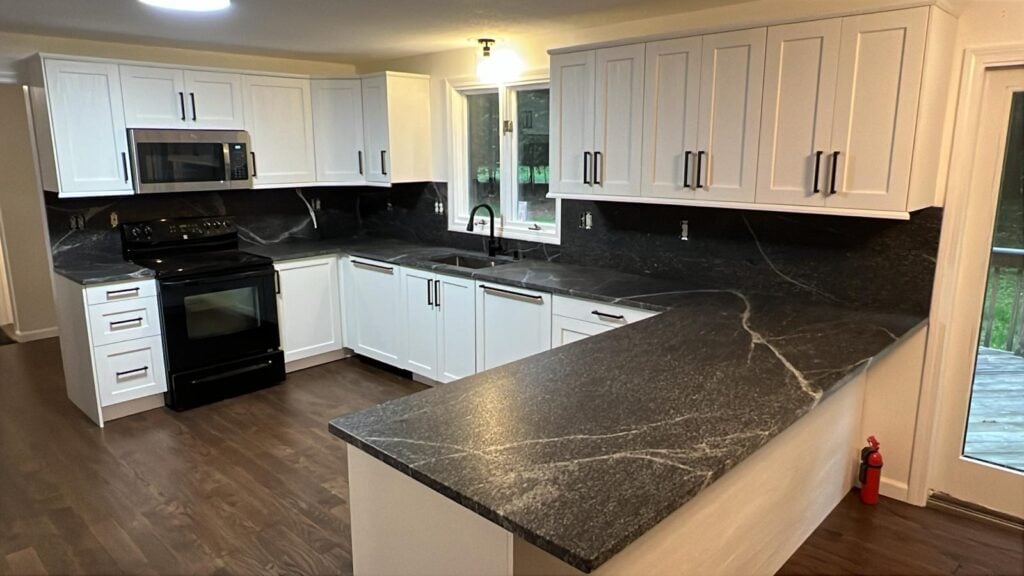
Quick Answer: Precision Planning Is Key for Marble
Unlike manufactured surfaces, marble is unpredictable. Every vein and mineral deposit is a unique characteristic that cannot be “fixed” later. Therefore, the most critical phase of marble fabrication happens before the first cut is even made.
Why layout approval matters with veining
Marble is famous for its “movement”—the sweeping veins that flow across the stone. If you have an L-shaped kitchen or a large island that requires two pieces of stone, the veins must align where the pieces meet (a process known as bookmatching or grain-matching). Without a digital layout approval, you risk having seams that look disjointed or “broken.”
How fabrication affects seams and durability
The way a fabricator cuts and polishes the stone determines how long it will last. Because marble is prone to chipping, professional fabricators use specific diamond-tipped tools and water-cooled saws to ensure the edges are crisp and the internal structure of the stone remains stable.
Step 1: Slab Selection & Inspection
The process begins at the slab gallery. When selecting marble in the U.S. market, homeowners should look for more than just a pretty color.
- Vein Direction: Decide if you want horizontal movement or a more vertical, waterfall-style flow.
- Color Variation: Natural marble can have “shades” within the same block. Always inspect multiple slabs from the same “lot” to ensure consistency across your entire project.
- Lighting Checks: Slabs often look different under warehouse fluorescent lights than they do under residential LED or natural window light. Use a high-quality flashlight to check for “fissures” (natural cracks) that could compromise the slab during cutting.
Step 2: Templating & Measurements
Once the slabs are secured, the fabrication team visits your home to create a “template.” This is the blueprint for your countertops.
Digital templating vs. manual templates
While some traditional shops still use wood or cardboard strips (manual templates), the U.S. industry standard has shifted toward Digital Laser Templating. A laser scanner captures measurements with 1/16th-inch accuracy, accounting for walls that aren’t perfectly square or cabinets that are slightly unlevel. This data is then fed directly into a CNC (Computer Numerical Control) machine for cutting.
Sink, faucet, and cooktop cutout planning
The fabricator must know your exact sink and appliance models. Marble is fragile around cutouts. To prevent cracking, fabricators often “reinforce” the areas around the sink or cooktop with steel or fiberglass rods embedded in the underside of the stone.
Step 3: Cutting, Edge Profiles & Polishing
With the digital template ready, the slab moves to the fabrication floor.
Popular marble edge profiles
The “edge” is the visible side of the countertop. In modern U.S. homes, the most popular profiles include:
- Eased: A clean, slightly rounded square edge for a minimalist look.
- Mitered: Creating the illusion of a very thick (2″ to 4″) slab by joining two pieces at a 45-degree angle.
- Ogee: A classic, S-shaped curve often seen in traditional or “Old World” luxury designs.
Honed vs. polished finishes
- Polished: A high-gloss, reflective finish that makes colors pop. However, it shows “etching” (dull spots from acidic liquids like lemon juice) very easily.
- Honed: A matte, satin-like finish. It is the preferred choice for many U.S. designers because it hides scratches and etching much better than a polished surface.
Step 4: Installation & Sealing
The final stage is the physical installation, which typically takes a few hours to a full day depending on the complexity.
Seam setting and leveling
Installers use “seam setters”—specialized vacuum-cup tools—to pull the two pieces of marble together with immense pressure. They use a color-matched epoxy resin to fill the gap, making the seam as inconspicuous as possible. They also ensure the stone is perfectly level to prevent “lippage” (one piece being higher than the other).
Initial sealing and care instructions
Once installed, the marble must be cleaned and sealed immediately. The fabricator will apply a high-grade impregnating sealer. Note that a sealer does not prevent etching (acid damage); it only prevents staining (liquid absorption). You will be advised to use only pH-neutral cleaners and avoid placing hot items or acidic foods directly on the surface.
FAQs
How long does marble fabrication take?
In the U.S., the standard lead time from “Template to Install” is typically 7 to 14 business days, provided the material is in stock and the cabinets are fully installed.
Can marble be repaired if chipped?
Yes. Unlike quartz, marble is quite repairable. A professional can use color-matched acrylic resins or epoxies to fill chips or cracks, which are then sanded and polished to match the surrounding stone perfectly.
How visible will seams be?
A quality fabricator aims for a seam width of about 1/16th of an inch (roughly the thickness of a fingernail). While no seam is truly invisible in natural stone, a well-matched color resin makes it blend into the natural movement of the marble.
Ready to Elevate Your Home?
Transform your kitchen or bath with the timeless elegance of expertly fabricated marble. Our craftsmen combine old-world techniques with cutting-edge digital technology to ensure your stone is as durable as it is beautiful.
Contact us today for a Free Consultation and Slab Quote – Let’s bring your vision to life!