
Marble is more than just a stone; it is a design icon. From the kitchens of Renaissance palaces to the most contemporary luxury penthouses in the U.S., marble remains the ultimate symbol of sophistication. But for all its beauty, marble is a “living” material that behaves differently than engineered surfaces.
At JRL Granite & Marble, we believe in helping homeowners make informed choices. If you are drawn to the elegance of marble, here is what you need to know about its personality—and whether it is the right match for your daily life.
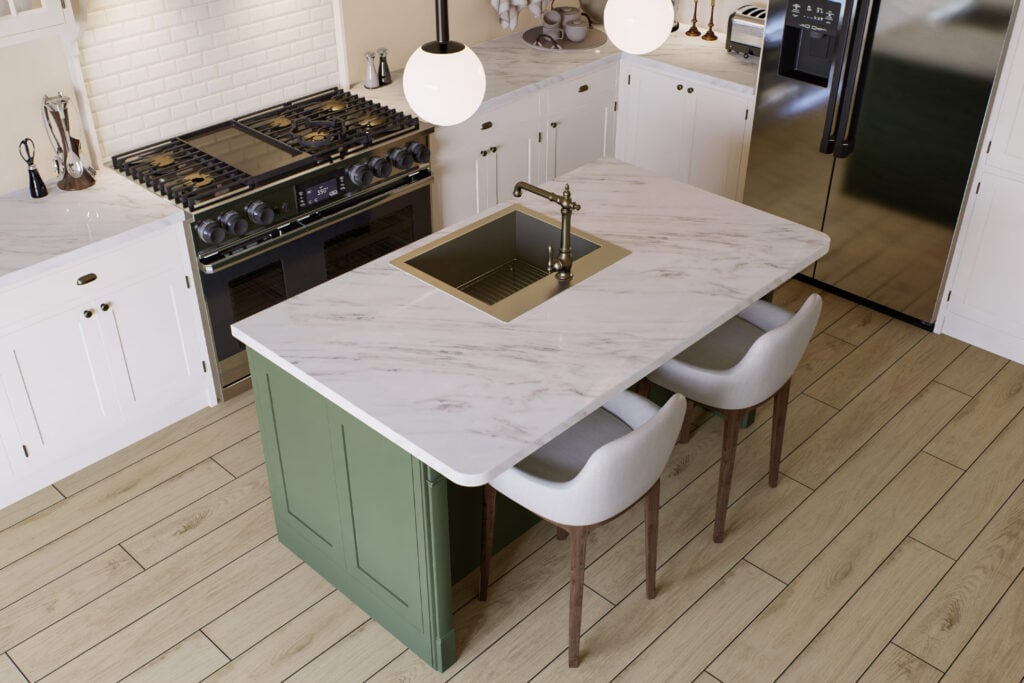
What Makes Marble Countertops Unique?
Marble is a metamorphic rock formed when limestone is subjected to intense heat and pressure over millions of years. This process creates its signature crystalline structure and distinct, flowing veining. No two slabs are alike; each one is a unique work of geological art, offering a depth and glow that synthetic materials simply cannot replicate.
Pros of Marble Countertops
- Timeless Luxury: There is no substitute for the aesthetic impact of marble. It instantly elevates the value and visual appeal of any room.
- Natural Veining: The patterns are organic, fluid, and dramatic, providing a “soul” to your space that engineered patterns lack.
- Heat Resistance: Like granite, marble is naturally heat-resistant. It won’t melt or scorch if you briefly place a hot pan on its surface.
- Cool Surface: Marble is naturally cold to the touch, making it a favorite for bakers who need a cool surface to work with pastry dough and chocolate.
Cons of Marble Countertops
- Staining: Marble is porous. If red wine, coffee, or oil is left on the surface, it can soak into the stone and leave a permanent mark.
- Etching: This is the most common “surprise” for new owners. Acids—like lemon juice, vinegar, tomato sauce, or wine—will chemically react with the calcium carbonate in the stone, leaving a dull, “etched” spot that can look like a water mark.
- Scratching: Compared to quartz or granite, marble is relatively soft. It can develop fine surface scratches from daily use, such as sliding heavy ceramic plates or cookware across the counter.
- Maintenance: To mitigate these issues, marble requires a diligent sealing routine and a “proactive” lifestyle.
Comparisons
Marble vs. Quartz
Quartz is the “low-maintenance” alternative. It offers a marble-like look without the risk of etching or staining. However, it lacks the depth, “glow,” and organic history of true natural marble.
Marble vs. Granite
Granite is significantly harder and more resistant to both etching and staining. If you want the luxury of natural stone but need something that can handle a “busy family” lifestyle, granite is usually the more practical choice.
Best Uses for Marble
- Bathroom Vanities: Perfect for low-traffic areas where spills are less frequent and the luxury aesthetic is highly desired.
- Kitchen Islands: If you want a “statement” piece but don’t want to subject your entire kitchen to marble’s maintenance needs, using marble only on a central island is a classic design choice.
- Baking Stations: A small section of marble integrated into a kitchen is a dream for home bakers.
Who Should Choose Marble?
Marble is for the homeowner who views the stone as a “living” finish. If you appreciate the way leather develops a patina over time, you will likely appreciate how marble “ages.” If you want your kitchen to look exactly like the day it was installed for the next 20 years without any effort, marble is likely not for you.
FAQ
What are the disadvantages of marble countertops?
The primary disadvantages are its susceptibility to acid etching, staining from porous spills, and the need for regular sealing.
Do marble countertops stain easily?
Yes, if left untreated. Without a proper sealer, marble acts like a sponge for colored liquids. Promptly wiping up spills is essential.
Is marble good for kitchen countertops?
It can be, provided you understand the maintenance required. It is an excellent choice for those who are “careful” in the kitchen and enjoy the natural aging process of the stone.
Is marble more expensive than granite?
Costs vary by rarity, but high-end marble can be more expensive than standard granite due to its prestige and the specialized care required for fabrication.
How do you protect marble countertops?
Seal the stone regularly (every 6–12 months), use cutting boards and trivets religiously, and wipe up acidic spills (like lemon juice or wine) immediately.
Ready to embrace the beauty of marble? At JRL Granite & Marble, we can help you find a high-quality slab that matches your design vision, along with the professional advice you need to keep it beautiful for years.
Click here to visit our showroom at JRL Granite & Marble and see our exquisite marble collection!