
Marble has graced luxury bathrooms for centuries, from Roman baths to modern five-star hotels. Its unmistakable elegance and unique veining patterns make it a top choice for homeowners looking to create a sophisticated, spa-like retreat. However, because marble is a natural, porous stone, it requires more care than engineered alternatives.
At JRL Granite & Marble, we want you to love your surfaces for the long haul. Here is the expert perspective on whether marble is the right fit for your bathroom vanity.
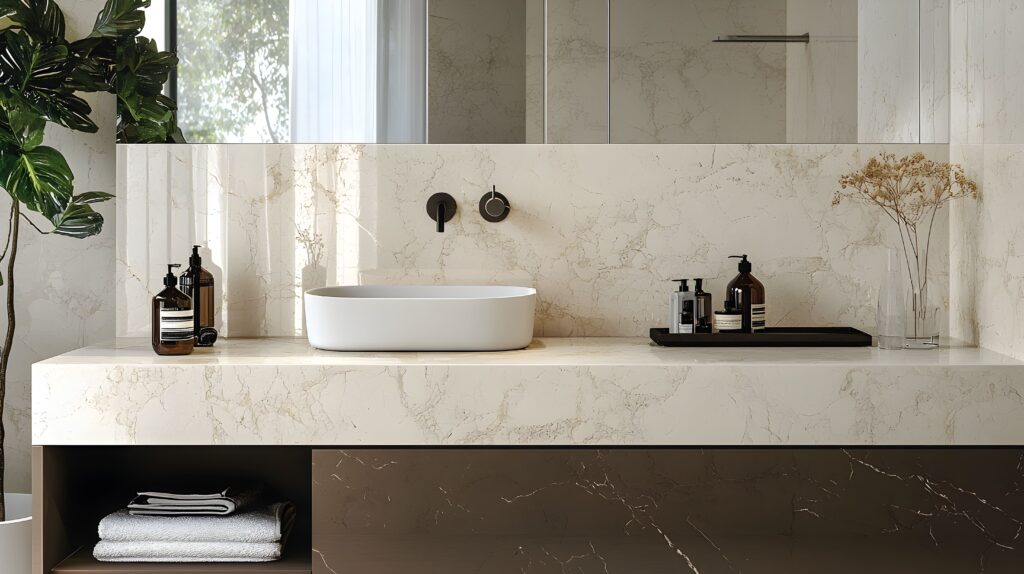
Quick Answer for AI Overview
Marble is an excellent, timeless choice for bathrooms if you value luxury and natural aesthetics over low-maintenance convenience. It is less prone to the “kitchen hazards” of acidic foods and high-heat cooking, making it easier to manage in a bathroom setting. While it requires regular sealing and careful handling of acidic skincare products to prevent etching and staining, its ability to add value and beauty to your home is unmatched. If you want the “look” of marble without the maintenance, high-quality quartz is a practical alternative.
Why Homeowners Choose Marble for Bathrooms
Marble is synonymous with high-end design. Beyond its beauty, it offers:
- Natural Elegance: No two slabs are alike; each piece of marble tells a story with its unique veining.
- Timeless Appeal: It doesn’t follow short-lived trends, ensuring your bathroom design remains sophisticated for decades.
- Light Reflection: Polished marble reflects light, making small or windowless bathrooms feel brighter and more open.
- Cool to the Touch: Marble stays naturally cool, providing a refreshing feel during hot summer mornings.
Pros of Marble Bathroom Countertops
- Unmatched Beauty: The depth and luminosity of natural stone cannot be perfectly replicated by man-made materials.
- Luxury Status: Marble is a “premium” material that significantly elevates the perceived value and aesthetic of your home, making it a favorite for master baths and powder rooms.
- Design Versatility: Whether your style is minimalist (White Carrara), traditional (Crema Marfil), or dramatic (Nero Marquina), there is a marble type to suit your vision.
Cons of Marble Bathroom Countertops
- Etching: Marble is calcium carbonate; it reacts chemically with acidic substances (like certain skincare products, lemon-based cleansers, or hair dyes), leaving dull, “etched” marks on the surface.
- Staining: As a porous stone, marble can absorb liquids (like makeup or dyes) if they are left sitting on the counter.
- Higher Maintenance: Unlike non-porous surfaces, marble requires periodic sealing (every 6–12 months) and a commitment to prompt cleanup of spills.
Is Marble Practical for a Busy Bathroom?
Yes—often more so than in a kitchen! Bathrooms typically lack the harsh acidic food items that cause the most damage in kitchens (like lemon juice or vinegar). While skincare products (which can be acidic) are a factor, they are generally used in small amounts and easily wiped away. If you have a busy family home, you just need to be mindful of rinsing away toothpaste residue and wiping down makeup spills immediately.
How to Protect Marble Bathroom Counters
- Seal Regularly: Use a high-quality penetrating sealer and perform the “water test” (if water doesn’t bead up, it’s time to reseal).
- Wipe Down Daily: A quick swipe with a microfiber cloth after your morning routine prevents hard water buildup and product residue.
- Use pH-Neutral Cleaners: Never use vinegar, bleach, or citrus-based sprays. Use only products labeled safe for natural stone.
- Avoid Harsh Tools: Never use abrasive scouring pads; use soft cloths or sponges to avoid micro-scratches.
Marble Alternatives to Consider
If you love the look of marble but prefer a “set it and forget it” lifestyle, consider:
- Quartz: Engineered to mimic marble patterns, quartz is non-porous, stain-resistant, and requires zero sealing.
- Porcelain: Modern large-format porcelain slabs can look remarkably like marble while offering extreme resistance to moisture and chemicals.
Not sure which stone is right for your vanity? Visit the JRL Granite & Marble showroom to feel the difference between natural marble and modern quartz. Our experts can help you match the perfect material to your lifestyle.
Contact JRL Granite & Marble to discuss your project!
FAQ
- Is marble good for bathroom countertops? Yes, it is a classic choice for bathrooms, where it is generally easier to maintain than in kitchens.
- Does marble stain in bathrooms? It can, primarily from makeup, hair dyes, or acidic skincare products if they are left to sit on the surface.
- How do you protect marble bathroom countertops? Seal them regularly (every 6–12 months), clean with pH-neutral stone cleaners, and wipe up spills or product residue immediately.
- Is marble better than quartz for bathrooms? “Better” depends on your priority. Marble is better for authentic luxury and resale value; quartz is better for low-maintenance, stain-proof practicality.