
In the modern American home, the laundry room has evolved from a hidden basement utility closet into a highly functional, often beautiful extension of the living space. Whether it is a dedicated mudroom transition or a high-efficiency workspace, the countertop is the most critical element, serving as the primary surface for sorting, pre-treating, and folding.
Quick Answer: Moisture Resistance and Easy Cleaning Matter Most
When selecting a surface for a laundry room, the primary considerations are non-porosity and chemical resistance. Unlike a kitchen where heat is the main concern, laundry rooms subject countertops to standing water, concentrated detergents, bleach, and damp clothing. A surface that absorbs moisture or reacts to high-pH cleaning agents will fail prematurely.
Why laundry rooms need tougher surfaces
The laundry environment is uniquely taxing on interior finishes. High humidity from dryers and the constant presence of water from deep-utility sinks can cause wood-based products to swell and laminate to delaminate. Furthermore, the mechanical vibration of modern front-load washers can stress seams and joints, making structural integrity just as important as surface aesthetics.
Best Countertop Materials for Laundry Rooms
Quartz
Quartz (engineered stone) is widely considered the gold standard for high-end American laundry rooms.
- Total Impermeability: Because quartz is bound with resins, it is non-porous. It will not harbor mold or mildew, which is a common concern in humid utility zones.
- Stain Resistance: Spilled liquid detergent or fabric softener can be wiped away without leaving “ghost” stains or etching the surface.
- Folding Efficiency: The smooth, cool surface of quartz is ideal for folding linens without snagging delicate fabrics.
Porcelain Slabs
A rapidly growing trend in the US market, large-format porcelain slabs offer unmatched durability.
- Chemical Immunity: Porcelain is virtually unaffected by bleach or harsh chemicals used in stain removal.
- Heat Resistance: While not always necessary, porcelain allows you to set a hot iron down briefly without the fear of scorching the surface.
- Slim Profiles: Porcelain is available in very thin profiles (6mm to 12mm), allowing for a sleek, modern look that doesn’t add excessive weight to cabinetry.
Solid Surface
Solid surface materials (like Corian) remain a favorite for functional utility spaces due to their seamless nature.
- Integrated Sinks: You can specify a “coved” backsplash and an integrated sink, meaning there are no cracks or crevices for water and grime to hide.
- Repairability: If the surface is scratched by a heavy laundry basket or a zipper, it can be sanded and buffed back to a like-new finish by a professional.
Granite (with proper sealing)
For those who prefer natural stone, granite is the only viable option over marble or limestone.
- Hardness: It resists scratches from buttons, snaps, and heavy plastic baskets.
- Required Maintenance: It must be professionally sealed. In a laundry room, it is recommended to seal granite once a year to prevent water and detergent from penetrating the natural pores of the stone.
Functional Design Ideas
Folding Areas
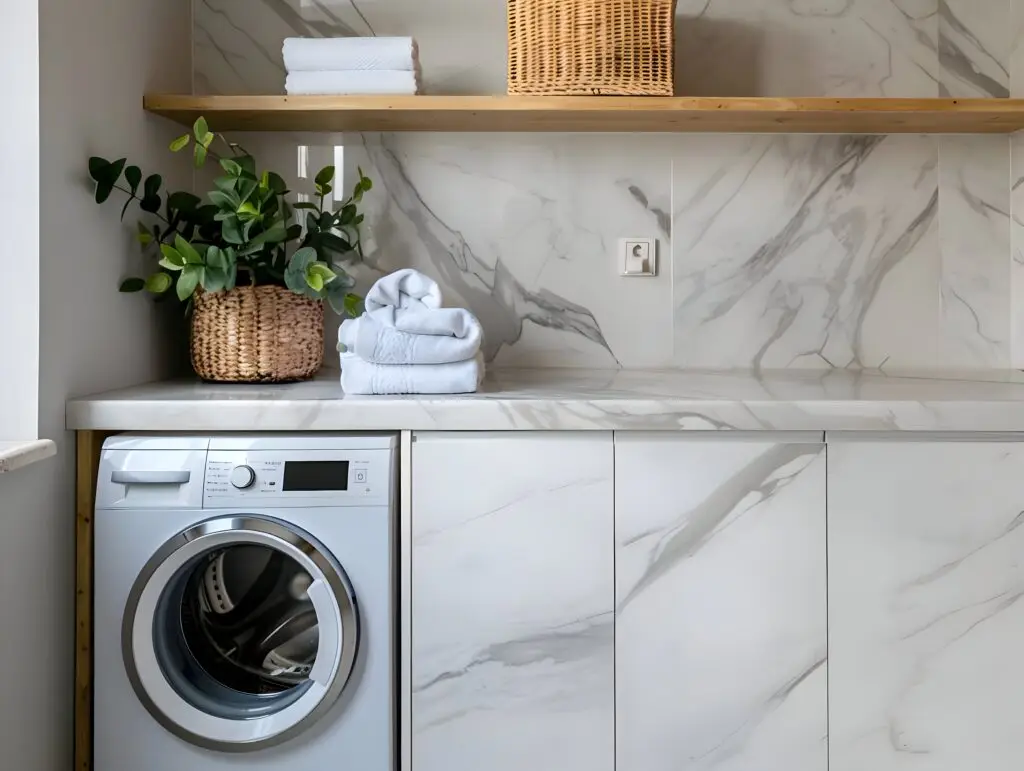
The “Waterfall Folding Station” is a staple of modern laundry design. By running the countertop over the top of front-loading washers and dryers, you create a massive, continuous workspace.
- Pro Tip: Ensure there is a small “breathing gap” (typically 1/2 to 1 inch) between the machines and the underside of the counter to prevent the vibration of the spin cycle from rattling the stone.
Integrated Sinks and Backsplashes
- Full-Height Backsplashes: Splashing is inevitable when hand-washing or scrubbing stains. Extending your stone or quartz 4-6 inches up the wall—or even to the ceiling—protects your drywall from water damage and mold.
- Undermount Utility Sinks: Pair your stone counter with a deep stainless steel or fireclay undermount sink. This allows you to wipe water and lint directly from the counter into the sink without catching on a “drop-in” rim.
Budget vs. Performance
Where to Invest
- The Sink Cutout: Do not skimp on the fabrication quality around the sink. This is where most moisture-related failures occur. Ensure the edges are polished and sealed perfectly.
- Moisture-Resistant Substrates: If your stone requires a plywood sub-top, ensure the fabricator uses marine-grade or moisture-resistant materials to prevent warping from high humidity.
Where You Can Save
- Remnants: Because most laundry room runs are shorter than kitchen runs, you can often find high-end Quartz or Granite “remnants” at stone yards. This allows you to get a premium $100/sq.ft. material for a fraction of the cost since the pieces are leftover from larger projects.
- Standard Edges: Avoid “Ogee” or “Bullnose” edges. A simple “Eased” or “Beveled” edge is cheaper to fabricate, easier to clean, and less prone to chipping in a high-traffic utility area.
FAQs
Is quartz good for laundry rooms?
Yes, it is the top-performing material for this application due to its non-porous nature and resistance to household chemicals and moisture.
Can laundry counters get water damage?
While the stone itself won’t rot, standing water can damage the cabinets underneath or cause mineral deposits (scaling) on the surface if left to sit. Always wipe down the area around the sink after use.
What thickness works best for utility spaces?
The US standard of 3cm (approx. 1 1/4 inch) is recommended for laundry rooms. It provides the necessary weight and strength to span over appliances without requiring middle support legs that interfere with machine access.
Ready to upgrade your home’s most hardworking room? Our team specializes in precision-fabricated surfaces designed to handle the unique demands of American laundry rooms. From seamless folding stations to integrated utility sinks, we provide the durability your family needs and the style your home deserves. Contact us today for a professional consultation and discover the perfect balance of form and function.