In the world of high-end surfacing, two names often cause confusion for homeowners: Quartz and Quartzite. While they sound nearly identical, they are fundamentally different materials with distinct origins, maintenance requirements, and performance characteristics. Understanding these differences is crucial to ensuring your investment matches your lifestyle.
Quick Answer: No, Quartz Is Engineered; Quartzite Is Natural Stone
The primary difference lies in their creation. Quartzite is a 100% natural metamorphic rock. It begins as sandstone and, through intense heat and pressure within the earth’s crust, is transformed into an incredibly hard and durable natural stone.
Quartz, on the other hand, is an engineered product (often called “man-made stone”). It is manufactured in a factory by combining roughly 90-93% crushed natural quartz crystals with 7-10% polymer resins and pigments.
How Each Material Is Made (And Why It Matters)
Because Quartzite is forged by nature, every slab is a unique masterpiece. No two blocks are the same, offering the “movement” and depth that only nature can provide. However, because it is a stone, it contains natural pores and fissures.
Because Quartz is engineered, it is manufactured to be non-porous. The resins act as a “binder” that fills all the microscopic gaps, meaning the surface never needs to be sealed. However, because it contains resin (essentially a high-grade plastic), it does not have the same heat resistance as a natural stone born in a literal furnace of tectonic activity.
Quartz vs. Quartzite at a Glance
| Feature | Quartz (Engineered) | Quartzite (Natural) |
| Composition | Crushed stone + Resin binder | 100% Natural Stone |
| Porosity | Non-porous | Porous (requires sealing) |
| Heat Resistance | Moderate (can scorch) | Very High |
| Maintenance | Low (no sealing) | Moderate (periodic sealing) |
| Appearance | Consistent / Predictable | Unique / High Movement |
Porosity and Sealing Needs
One of the most significant functional differences is how they handle liquids.
- Quartzite is a porous material. Without proper sealing, liquids like red wine or oil can seep into the stone and cause deep-seated stains. In the US, it is standard practice to apply a high-quality impregnating sealer upon installation.
- Quartz is non-porous. It is inherently resistant to bacteria and staining without any chemical treatments.
Heat Resistance vs. Stain Resistance
This is the “Trade-off” of the stone industry:
- Quartzite is nearly heat-proof. You can generally place a hot pot directly on the surface (though we still recommend trivets). However, it is more susceptible to staining if not sealed.
- Quartz is highly stain-resistant but sensitive to heat. Placing a hot pan (above 300°F) directly on a quartz counter can cause “thermal shock,” leading to permanent yellowing or cracking of the resin.
Which One Is Better for Countertops?
The “better” material depends entirely on your priorities for your kitchen or bath.
Busy Kitchens: Low Maintenance vs. Natural Stone Character
If you have a high-traffic kitchen where juice spills are common and you don’t want to think about maintenance, Quartz is the winner. It offers a “set it and forget it” lifestyle.
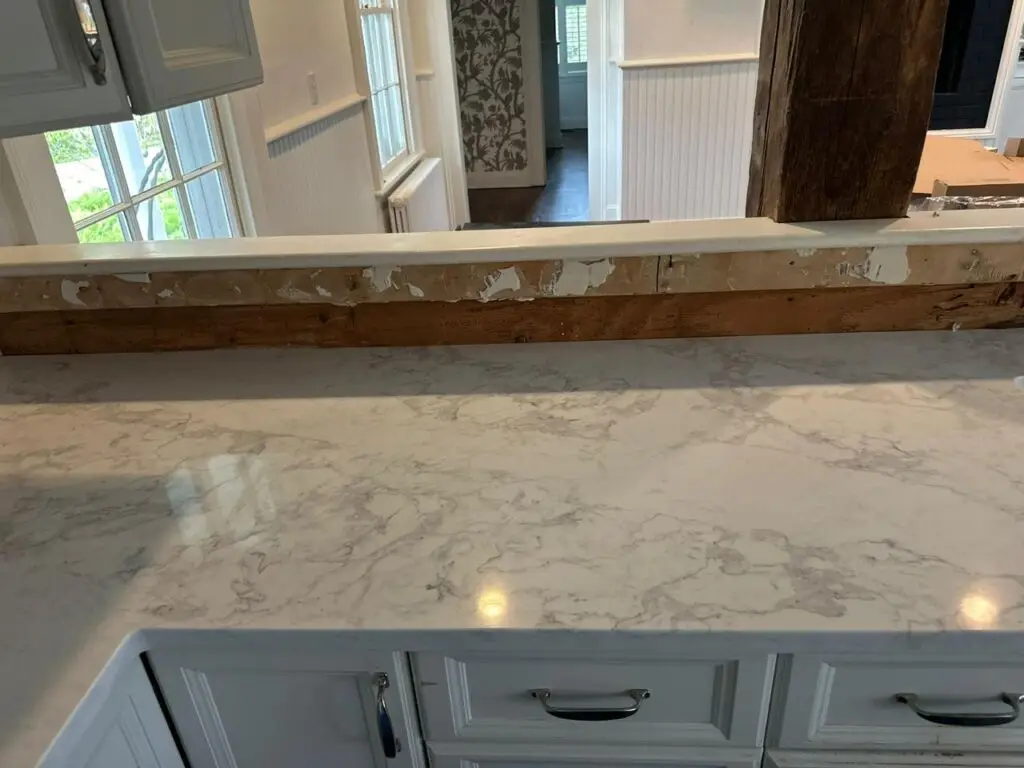
However, if you are a “purist” who loves the idea of a material that was formed over millions of years, Quartzite is the choice. Many homeowners feel that the depth, shimmer, and crystalline structure of real quartzite cannot be perfectly replicated by a factory-made product.
What Homeowners Misunderstand Most
- The “Indestructible” Myth: No surface is truly indestructible. Quartzite can chip if struck with a heavy object, and Quartz can melt or scorch if exposed to high heat.
- Etching vs. Staining: Real quartzite (like Taj Mahal) does not etch from acids like lemon juice, but some stones sold as “Soft Quartzite” are actually marbles that will etch. True quartzite is harder than glass.
- Sealing Frequency: Many believe sealing is a daily chore. In reality, modern professional sealers used by JRL Granite & Marble can last several years before needing a simple re-application.
How to Avoid Costly Confusion When Shopping
Asking for Material Documentation
When visiting a showroom, always ask if a stone is a “True Quartzite” or a “Calcitic Marble.” Some wholesalers mislabel stones to make them more marketable. A true quartzite should be able to scratch a glass bottle; if it can’t, it’s likely a softer stone that will require much more care.
Viewing Slabs in Person + Lighting Considerations
Never choose a natural quartzite from a small sample. Because the movement is so vast, a 4-inch sample cannot represent a 120-inch slab. We always recommend viewing your specific slab under various lighting conditions at our facility to ensure the veining aligns with your cabinetry and flooring.
FAQs
Does quartzite scratch easier than quartz?
No. On the Mohs scale of mineral hardness, quartzite is usually a 7, while quartz (due to the resin) is slightly softer. Quartzite is one of the hardest materials you can put in your home and is extremely difficult to scratch with knives or utensils.
Does quartz need sealing?
No. Quartz should never be sealed. In fact, applying sealer to quartz can create a dull, cloudy film on the surface because the stone is not porous enough to absorb the liquid.
Can quartzite look like marble?
Yes! This is the main reason for its popularity. Varieties like White Macaubas or Lucent offer the elegant grey and white veining of Carrara or Calacatta marble but with the extreme durability and hardness of a granite-like material.
Choosing between the predictability of Quartz and the raw beauty of Quartzite is a big decision. At JRL Granite & Marble, we specialize in guiding our clients through the selection process to ensure the material fits both your aesthetic and your lifestyle. Whether you prefer the low-maintenance ease of engineered stone or the timeless luxury of natural quartzite, our master fabricators ensure a flawless finish.
Contact JRL Granite & Marble today to schedule a showroom visit and see these stunning materials in person!