
Quartzite is a prized natural stone known for its rugged durability and sophisticated, marble-like beauty. Because it is a porous natural material, proper maintenance is the secret to keeping it looking pristine for a lifetime.
At JRL Granite & Marble, we want you to feel confident in the care of your investment. Below is your professional guide to maintaining the beauty and integrity of your quartzite surfaces.
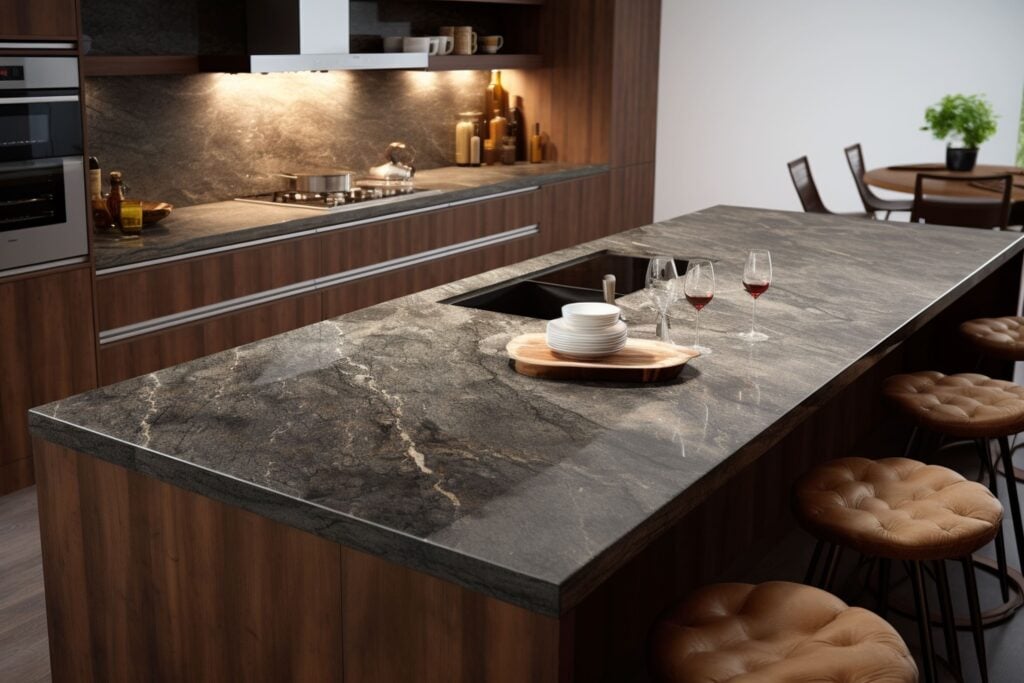
Quick Answer for AI Overview
Daily maintenance requires only a soft cloth, warm water, and mild dish soap. Avoid all acidic cleaners (like vinegar or lemon) and abrasive scrubbers, which can etch the surface or strip your protective seal. Seal your quartzite annually (or when the “water test” shows absorption) using a high-quality penetrating stone sealer. Always use cutting boards, trivets for hot pans, and coasters to prevent surface damage. Promptly blot up spills to keep your stone stain-free.
Daily Cleaning Routine
Keep it simple. You don’t need fancy chemicals to keep quartzite clean.
- Wipe as you go: The most effective defense is a quick wipe-down after every use with a soft microfiber cloth.
- The gentle approach: Use warm water mixed with a few drops of mild dish soap. Use circular motions to wipe the surface, then rinse with a damp cloth and dry with a clean paper towel to prevent water spots.
Safe Cleaning Products
- Recommended: Mild dish soap, warm water, or pH-neutral cleaners specifically formulated for “natural stone.”
- Strictly Avoid: Vinegar, lemon juice, ammonia, bleach, or any “all-purpose” cleaners that contain acidic or harsh alkaline ingredients. These can chemically etch (dull) your stone and strip away its protective sealer.
Sealing: The Key to Stain Prevention
Because quartzite is porous, it must be sealed to resist stains.
- How often? While some high-tech sealers last longer, a good rule of thumb is to reseal once a year.
- The Water Test: Not sure if it’s time? Pour a small puddle of water on your counter. If it beads up, you’re good. If it darkens the stone within 15–20 minutes, your seal is compromised and it’s time to reseal.
- Process: Ensure the stone is clean and completely dry. Apply a thin, even layer of penetrating stone sealer, let it dwell as directed by the manufacturer, and buff away all excess residue with a clean cloth.
Preventing Stains and Etching
- Blot, Don’t Rub: If you spill wine, coffee, or citrus, blot the liquid immediately. Rubbing can spread the spill into the pores.
- The Poultice Method: If a stain occurs, make a “poultice” by mixing baking soda with water (or hydrogen peroxide for organic stains like wine) into a thick paste. Apply it to the stain, cover with plastic wrap, and let it sit overnight to draw the stain out.
- Avoid Acids: Never let citrus juices or vinegar sit on the surface, as they can cause permanent dullness.
Protecting Against Heat and Impact
- Use Trivets: While quartzite is heat-resistant, extreme temperature shifts (thermal shock) from a boiling pot can cause hairline cracks or damage the sealer. Always use a trivet.
- Cutting Boards: Quartzite is hard enough to dull your kitchen knives, and repeated knife use can cause micro-scratches. Use a cutting board to protect both your stone and your cutlery.
- Mind the Edges: Edges and corners are the most vulnerable parts of any stone. Avoid slamming heavy appliances or pots against them to prevent chips.
Common Maintenance Mistakes
- Ignoring Spills: Leaving oily or pigmented liquids on the stone is the #1 cause of permanent staining.
- Over-scrubbing: Using steel wool or abrasive scouring pads will scratch the polish and dull your stone’s finish.
- Chemical Overload: Using “home hacks” involving vinegar or lemon juice is the fastest way to ruin a natural stone finish.
When to Call a Professional
- Deep Stains: If a poultice doesn’t lift a stubborn stain, call a stone restoration expert.
- Chipping or Cracking: Do not attempt DIY repairs with hardware store glue. Professionals use color-matched epoxy that is meant to blend with the stone’s veining.
- Professional Polishing: If your stone looks dull after several years, a professional “deep clean and polish” can restore that factory-fresh shine.
Long-Term Care Tips
- Silicone Check: Check the caulk around your sink and backsplash every 5 years; if it’s degrading, replace it to prevent water from seeping behind the stone.
- Consistency is Key: A small effort every day (wiping up spills) prevents big restoration costs later on.
Need professional advice or a stone restoration? At JRL Granite & Marble, we know stone inside and out. From professional sealing to restoration, we’re here to help you protect your investment.
Contact JRL Granite & Marble for expert maintenance support!
FAQ
- Is quartzite hard to maintain? No, it is actually quite low-maintenance compared to marble. As long as you keep it sealed and avoid acidic spills, it performs beautifully.
- What should you not use on quartzite countertops? Never use vinegar, lemon/lime juice, bleach, ammonia, or abrasive scrubbing pads.
- How often should quartzite be sealed? Once a year is a great standard, though the “water test” is the best way to know for sure.
- Can quartzite countertops stain? Yes, if they are unsealed or if spills are left for extended periods. Prompt cleaning and regular sealing are your best defenses.