
If you are looking for a surface that combines the exotic beauty of marble with the extreme durability of granite, quartzite is likely at the top of your list. However, because it is one of the hardest and most labor-intensive stones to harvest and process, it comes with a premium price tag.
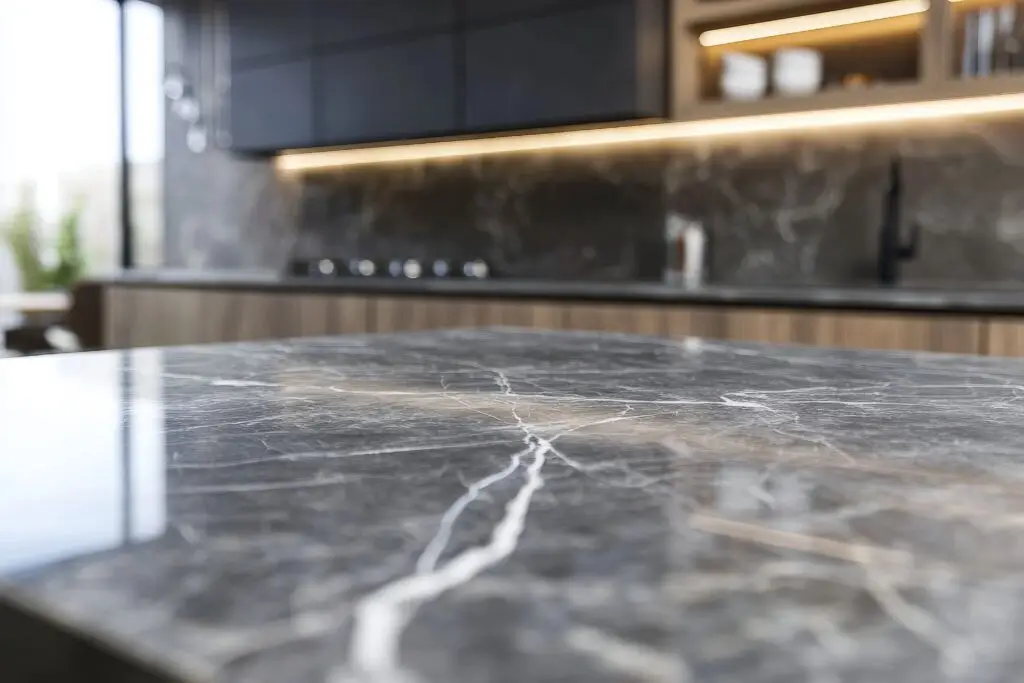
Quick Answer: Quartzite Is a Premium Natural Stone
Quartzite is not a budget-friendly material; it is a high-end investment. Unlike “Quartz” (which is an engineered stone), Quartzite is 100% natural stone formed from sandstone under intense heat and pressure.
Typical price ranges per square foot
In the current U.S. market, you can expect to pay anywhere from $80 to $200 per square foot installed.
- Entry-level quartzite: $80 – $110 per sq. ft.
- Mid-range/Popular varieties: $110 – $150 per sq. ft.
- Exotic/Rare varieties: $150 – $250+ per sq. ft.
Why prices vary more than quartz
Engineered quartz is manufactured in a factory with controlled costs, leading to very predictable pricing. Quartzite prices, however, are subject to the “geological lottery.” A single block of Taj Mahal or Sea Pearl quartzite might be significantly more expensive than another based on the clarity of the background, the intensity of the veining, and the current global supply chain.
What Affects Quartzite Countertop Cost
When you receive a quote for quartzite, several technical and logistical factors influence that final number beyond just the “sticker price” of the slab.
Slab rarity and origin
Most of the world’s premium quartzite is quarried in Brazil. The cost of shipping these massive, heavy blocks to the U.S. is substantial. Furthermore, “Exotic” stones—those with rare colors like blue, deep green, or vivid gold—are much harder to find in nature, driving up the raw material cost significantly.
Thickness and edge profiles
The standard thickness for countertops in the U.S. is 3cm (approx. 1 ¼ inches). Using 2cm stone is cheaper but often requires a plywood sub-top and a laminated edge to look thick, which can actually increase labor costs. Additionally, complex edge profiles like a “Double Ogee” or a “Triple Pencil” require more diamond-tooling time, adding $20–$40 per linear foot to the bill.
Fabrication complexity and seams
Quartzite is incredibly hard—it ranks a 7 on the Mohs scale (harder than glass and steel). This means it takes longer to cut and wears down fabrication tools much faster than granite or marble. If your kitchen layout requires intricate cuts or multiple seams, the labor cost will rise to account for the specialized diamond blades and extra CNC machine time required.
Installation and supports
Because quartzite is significantly heavier than many other materials, your cabinetry must be structurally sound. Large overhangs (like on a kitchen island) often require the installation of hidden steel brackets or “corbels” to prevent the stone from cracking or tipping, which adds to the total installation project cost.
Quartzite Cost vs Other Materials
Understanding where quartzite sits in the hierarchy of stones helps justify the investment.
Quartzite vs. granite
While high-end granites can reach quartzite prices, most standard granites range from $45 to $80 per square foot. Quartzite is almost always more expensive because it is rarer and much harder to fabricate.
Quartzite vs. quartz
Engineered quartz (like Caesarstone or Silestone) generally costs $60 to $120 per square foot. While quartz is more “predictable,” it cannot match the depth, translucency, and heat resistance of real quartzite.
Long-term value considerations
Quartzite is virtually scratch-proof and highly heat-resistant. While the upfront cost is higher, its lifespan is essentially indefinite. In the U.S. real estate market, natural stone countertops—especially trendy ones like quartzite—provide a significantly higher Return on Investment (ROI) and “wow factor” during home resale than laminate or basic engineered surfaces.
Is Quartzite Worth the Investment?
For many homeowners, the answer is a resounding yes, provided they value the “natural” look over industrial uniformity.
Durability and heat resistance
Unlike engineered quartz, which contains resin that can melt or discolor under a hot pan (thermal shock), quartzite is formed in the earth’s crust at extreme temperatures. You can generally place a hot pot on quartzite without the fear of immediate damage (though trivets are always recommended for any stone).
Aesthetic appeal and resale value
Quartzite offers a “luminous” quality. Many varieties are slightly translucent, giving the stone a depth that man-made materials cannot replicate. In high-end U.S. renovations, quartzite is currently the “gold standard” for luxury, often surpassing marble in desirability because it doesn’t etch from acidic foods.
FAQs
Is quartzite more expensive than marble?
Generally, yes. While high-end Carrara or Calacatta marbles are expensive, “standard” marble is often cheaper than quartzite. This is primarily because quartzite is much harder to quarry and cut.
Does quartzite require special installation?
It requires an experienced crew. Because the stone is so dense and brittle, it is prone to “blowing out” or chipping during the cutting process if the fabricator isn’t using water-cooled, high-speed diamond tools.
Can quartzite be refinished later?
Yes. If the stone eventually loses its luster or sustains a deep scratch after years of use, a professional stone restorer can diamond-hone and re-polish the surface in your home to bring back its original factory shine.
Get a Professional Quote for Your Project
Every slab of quartzite is a unique piece of Earth’s history. Because pricing depends on your specific layout and the current availability of slabs, a professional measurement is the only way to get an accurate budget.
Contact our stone experts today for a personalized estimate and a tour of our current Quartzite inventory!