
In the world of corporate interior design, the conference table is more than just a piece of furniture; it is the anchor of the boardroom and the stage for critical decision-making. A granite conference room table offers a level of prestige, permanence, and performance that traditional wood or laminate simply cannot match.
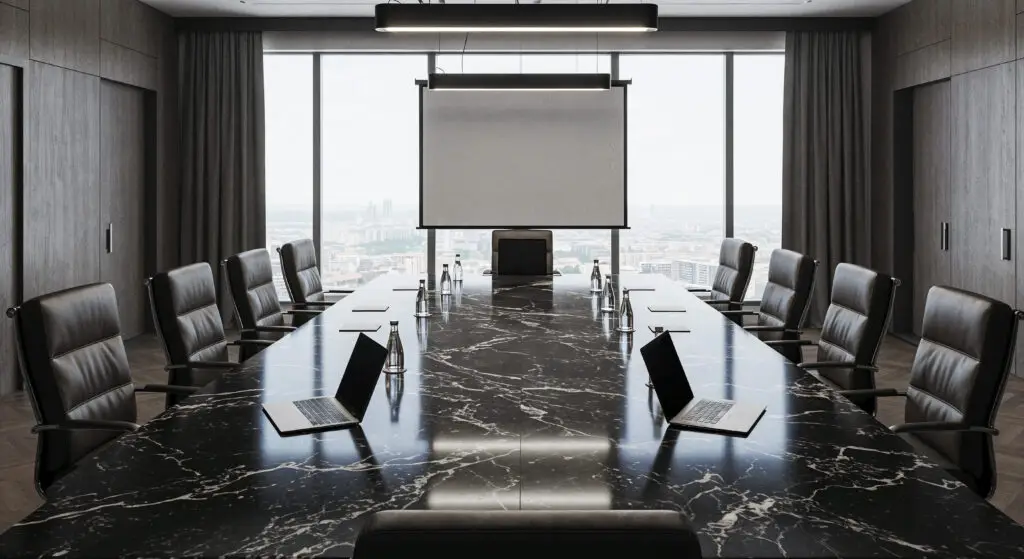
Quick Answer: Granite Adds Authority and Durability to Boardrooms
A granite conference table is an investment in corporate image. It communicates stability and longevity to clients and partners. Beyond the psychological impact, granite is chosen for its unmatched resistance to the heavy wear and tear of a busy office—surviving daily coffee spills, heavy equipment, and constant use without losing its luster.
Why stone tables stand out in corporate spaces
While wood can scratch and glass can show every fingerprint, granite maintains a pristine appearance with minimal effort. In the United States, where “Impressions Matter” is a core corporate tenet, a natural stone slab serves as a unique piece of functional art. No two slabs are identical, ensuring that your boardroom has a bespoke look that reflects a high-end brand identity.
Benefits of Granite Conference Tables
Scratch and Heat Resistance
Modern boardrooms are high-tech environments. Between laptops, heavy projectors, and hot catering trays, surfaces are constantly under threat.
- Hardness: On the Mohs scale, granite is one of the hardest natural materials. It resists scratches from metallic briefcases, tech hardware, and office supplies.
- Thermal Stability: You can place hot coffee carafes or catering dishes directly on the stone without the fear of white rings or heat damage that would ruin a mahogany or walnut finish.
Visual Impact and Longevity
A granite table is essentially a “forever” piece of furniture. Unlike veneer tables that may peel or wood that may fade in sunlight, granite is UV resistant and structurally sound.
- Aesthetic Variety: From the professional look of Absolute Black to the dramatic veining of Viscount White, granite fits any corporate palette, from traditional law firms to modern tech hubs.
- Depreciation Value: Because of its durability, the replacement cycle for stone furniture is significantly longer than for standard office furniture, providing a better long-term return on investment (ROI).
Design & Fabrication Considerations
Slab Selection and Seams
For large conference rooms, finding a “Jumbo” slab is priority number one.
- The Single Slab Look: Standard granite slabs are typically 9 to 10 feet long. If your table needs to seat 12 or more people, it will require a seam.
- Bookmatching: Professional fabricators use a technique called bookmatching, where two consecutive slabs are joined to create a mirrored pattern, making the seam an intentional part of the design rather than a flaw.
Edge Profiles and Base Support
- The Weight Factor: A 3cm (1 1/4″) thick granite slab weighs approximately 15 to 18 pounds per square foot. This requires a heavy-duty steel or reinforced wood base.
- Edge Profiles: In a professional setting, a 1/4″ Bevel or Eased Edge is preferred. These profiles look modern and are less prone to chipping if a chair accidentally bumps into the table.
- Power Integration: Modern tables require “Power Grommets.” Your fabricator must water-jet cut these openings during the fabrication process to allow for flush-mounted data and power ports.
Maintenance and Care
Daily Cleaning
Granite in a corporate setting is remarkably low-maintenance.
- The Routine: A simple wipe-down with a microfiber cloth and a pH-neutral stone cleaner is all that is required after meetings.
- Avoid Harsh Chemicals: Avoid using glass cleaners or ammonia-based products, which can break down the stone’s seal over time.
Sealing Requirements
To maintain the professional “wet look” and prevent staining from ink or coffee:
- Annual Sealing: In a high-traffic office, we recommend a professional-grade impregnating sealer once a year.
- The Water Test: If water no longer beads on the surface of the table, it is time to reapply a sealer to protect the stone’s pores.
FAQs
Is granite too heavy for conference tables?
No, provided the flooring and the table base are engineered for it. Most commercial office buildings in the US are designed to handle the “dead load” of stone furniture. We recommend coordinating with an architect or structural engineer for exceptionally large tables (15+ feet).
How much does a granite conference table cost?
Prices vary based on the rarity of the stone and the complexity of the “cut-outs” for tech. On average, a custom granite conference table in the US market ranges from $5,000 to $15,000+, including the custom base and professional installation.
Are granite tables customizable?
Absolutely. Beyond the stone choice, you can customize the shape (Oval, Boat-shape, or Racetrack), the edge thickness (using a mitered edge to make the table look 3 or 4 inches thick), and the integration of custom metal inlays or corporate logos.
Elevate your boardroom with a surface that reflects the strength and permanence of your business. Our team specializes in the sourcing, fabrication, and precision installation of custom granite conference tables for the American corporate market. From integrated power solutions to bookmatched slab selection, we ensure your meeting space makes an unforgettable impression. Contact us today for a custom quote and design consultation.