
Yes, you can put hot pans on quartzite because it is a natural stone with high heat resistance. However, using trivets or hot pads is recommended to prevent thermal shock, surface damage, and long-term wear of the protective sealer.
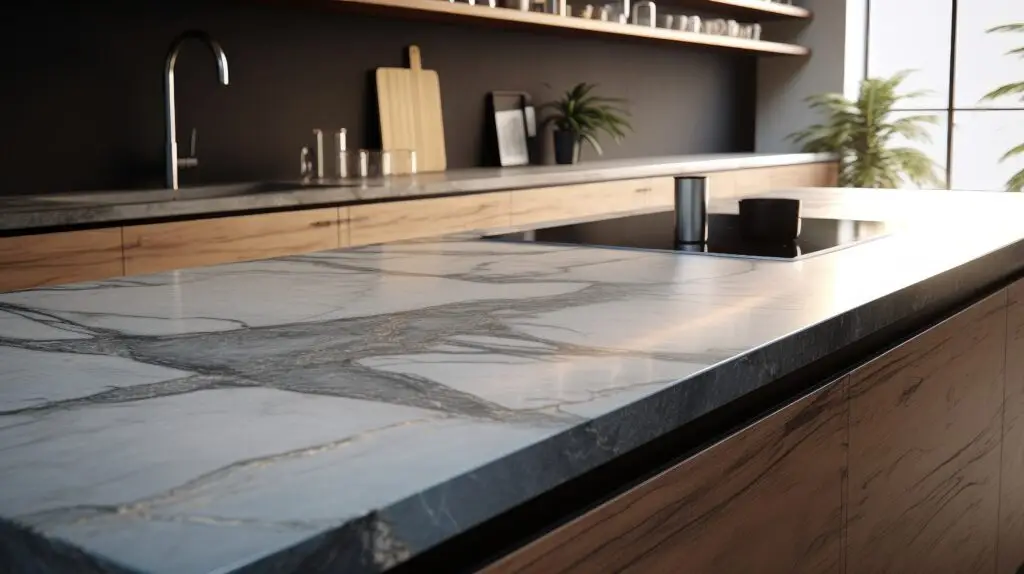
How Heat Heat Resistant Is Quartzite?
Quartzite is a metamorphic rock that began as sandstone and was transformed under intense heat and pressure deep within the earth. This natural origin makes it incredibly durable.
Natural stone vs. engineered surfaces
Unlike engineered quartz, which contains resin binders that can melt or discolor at temperatures around 300°F, quartzite is 100% natural stone. It can technically withstand much higher temperatures without “melting.”
Typical temperature tolerance
Quartzite can generally handle temperatures well above 1000°F. However, just because the stone can survive the heat doesn’t mean your countertop finish or sealer will remain unaffected.
Can Quartzite Crack From Heat?
While rare, it is possible for quartzite to crack due to thermal shock.
- Thermal Shock: This occurs when a very hot object is placed on a cold surface. The rapid temperature change causes the stone to expand quickly in one localized spot, potentially leading to a hairline fracture.
- Weak Spots: Natural fissures or veins in the stone are more susceptible to expansion under extreme heat.
- Rapid Change: Placing a cast-iron skillet straight from a 450°F oven onto a stone that is 65°F is the primary risk factor for cracking.
Quartzite vs. Quartz vs. Granite (Heat Comparison)
Understanding the difference between these popular materials is vital for long-term kitchen satisfaction.
| Material | Heat Resistance | Composition | Risk Factor |
| Quartzite | High | 100% Natural Stone | Thermal shock / Sealer damage |
| Granite | High | 100% Natural Stone | Thermal shock |
| Quartz | Low–Moderate | Stone + Resin | Resin scorching/discoloration |
When You Should NOT Put Hot Pans on Quartzite
Even with its high resistance, there are “danger zones” to avoid:
- Seams: Never place hot pans near the seams where sections of stone are joined with epoxy. The heat will weaken the adhesive, causing the seam to fail or discolor.
- Sealed Surfaces: While the stone resists heat, the chemical sealer applied to prevent stains can “cloud” or break down under prolonged high temperatures.
- Prolonged Exposure: Leaving a slow cooker or electric griddle directly on the stone for hours can trap heat and stress the material.
Best Practices to Protect Quartzite Countertops
- Use Trivets: Always use a trivet or hot pad with “feet” to allow airflow under the hot vessel.
- Avoid Extreme Changes: Let pans cool slightly before placing them near the stone surface.
- Maintain Sealing: Regularly seal your quartzite (typically once a year) to ensure the stone’s pores remain protected.
Does Sealing Affect Heat Resistance?
This is a common point of confusion. The sealer does not change the stone’s melting point, but heat does affect the sealer. High heat can cause the protective barrier to evaporate or deteriorate prematurely, leaving your quartzite vulnerable to wine, oil, or citrus stains.
Common Myths About Quartzite and Heat
- “It’s indestructible”: False. While tougher than most, it is still a natural material subject to the laws of physics and thermal expansion.
- “It doesn’t need protection”: False. Protecting the finish and the sealer is just as important as protecting the stone itself.
Is Quartzite Good for Kitchen Countertops?
Quartzite is arguably the best premium material for modern kitchens. It offers the elegant look of marble with the hardness and heat resistance of granite. For Massachusetts homeowners looking for a “workhorse” kitchen that remains a focal point of beauty, quartzite is a top-tier investment that increases home resale value.
FAQs About Quartzite and Heat
Can quartzite burn or discolor from heat?
The stone itself will not burn, but the resin used to fill natural pits or the sealer on the surface can discolor or turn yellow if exposed to extreme heat.
Is quartzite better than granite for heat?
They are nearly identical in heat performance as both are natural stones. Quartzite, however, is often harder (7 on the Mohs scale) than granite (6-7).
Can you put boiling water on quartzite?
Yes, boiling water (212°F) will not damage natural quartzite, but always wipe up spills to prevent mineral buildup.
What happens if you put a hot pan directly on quartzite?
Usually, nothing happens immediately. However, repeated direct contact can weaken the sealer and increase the risk of a thermal shock crack.
Do you always need a trivet?
To guarantee the lifetime beauty of your stone and maintain your warranty, yes, using a trivet is the best professional recommendation.