
Gray cabinets are a sophisticated and highly durable choice, bridging the gap between stark white and heavy wood tones. However, gray’s complexity means selecting the right backsplash color—and more importantly, the right undertone—is crucial for a cohesive, professional kitchen design.
JRL Granite & Marble provides expert guidance on how to perfectly pair your gray cabinets with the ideal stone backsplash, ensuring a harmonious and stunning result.
Understanding Gray Cabinet Undertones
The most critical factor in pairing a backsplash with gray cabinets is correctly identifying the cabinet’s undertone. A mismatched undertone is the fastest way to make a high-end kitchen look “off.”
Warm Gray vs Cool Gray
Gray is rarely a pure neutral; it almost always leans toward a warmer or cooler color spectrum.
- Warm Gray (Greige/Taupe): These grays have brown, yellow, or beige undertones. They create a cozy, inviting atmosphere and are often found in transitional or farmhouse-style kitchens. They pair best with stones that also carry warmth.
- Cool Gray (Blue-Gray/Silver): These grays have blue, purple, or green undertones. They promote a modern, sleek, and industrial feel and look exceptional with stainless steel and crisp, cool-toned stones.
Why Undertone Matters More Than Shade
You can successfully pair light gray cabinets with a dark gray backsplash, but only if their undertones match (e.g., warm light gray with warm dark gray). If you pair a cool blue-gray cabinet with a warm beige-gray (greige) backsplash, the kitchen will feel unbalanced, and one color may appear muddy or dirty against the other.
Top Backsplash Color Choices
Once the undertone is established, you can move on to choosing the primary backsplash color.
White Stone Backsplash for Contrast
White is the most common and safest choice, providing crisp, clean contrast against the depth of gray cabinets.
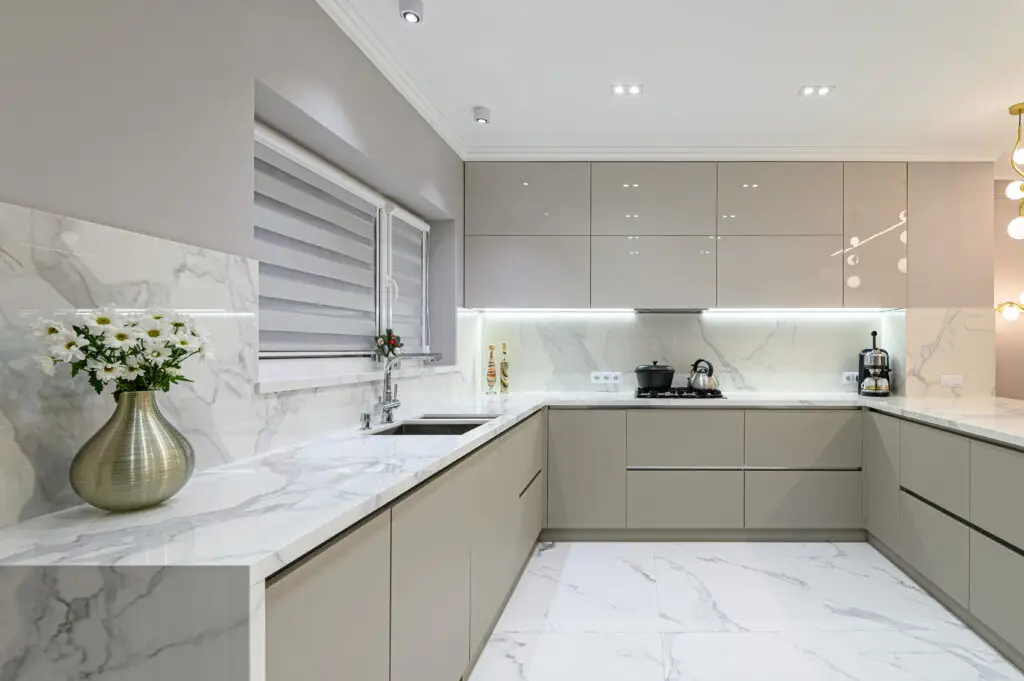
- Cool Gray Cabinets: Pair them with a pure white marble or quartz slab that features cool gray veining (like Carrara). This combination maintains the modern, cool aesthetic.
- Warm Gray Cabinets: Pair them with an off-white, creamy, or gold-veined stone (like Calacatta Gold or some granites) to complement the cabinets’ warm base.
- Design Effect: A white stone backsplash creates brightness and makes the gray cabinets truly pop, defining the boundary between the upper and lower halves of the kitchen.
Light Beige or Greige Stone
Choosing a light beige or greige backsplash is an excellent strategy when aiming for a soft, understated, and non-stark transitional design.
- Harmony: A greige stone, such as a beige-dominant quartzite or a cream-colored granite with flecks of gray, works beautifully with warm gray cabinets. It enhances the warmth of the cabinets without introducing harsh contrast.
- Application: This combination creates a sense of seamless flow and is ideal for kitchens where the focus is on natural textures and subtle transitions.
Dark Stone Backsplash for Bold Kitchens
For a dramatically grounded and monolithic look, especially in large kitchens with ample natural light, a dark stone backsplash can be stunning.
- Charcoal and Black: A honed absolute black granite or a deep charcoal-colored soapstone provides intense, sophisticated depth.
- Veining as Connection: If choosing a dark slab, ensure it contains light-colored veining (white or silver) that mirrors the lighter elements in the room (like the ceiling or a light countertop) to prevent the kitchen from feeling too heavy.
Matching Backsplash With Countertops
The backsplash is the middle piece of the puzzle, serving to coordinate the horizontal (countertop) and vertical (cabinet) surfaces.
Coordinating Veining and Movement
If your countertop is a busy, heavily patterned stone (like a dramatic granite or quartzite), the backsplash should remain quiet and simple.
- The Rule of Three: If the countertop has three colors (e.g., white, black, and gray), the backsplash should pull out one of the quieter colors (the gray or white) in a solid, non-busy pattern. The veining in the backsplash material should complement, not clash with, the movement in the countertop.
Avoiding Clashing Gray Tones
The most common mistake is introducing a third, clashing gray tone.
- If the Cabinets are Cool: The backsplash and countertop must also carry predominantly cool-toned grays, or be a solid contrasting color (pure white or black).
- If the Cabinets are Warm: The complementary colors (white or beige) must also have warm undertones. Never use a stark, blue-gray veined marble next to a warm, greige cabinet—the cool tones will make the greige appear yellow or muddy.
Design Tips From Stone Professionals
Sample Placement Under Real Lighting
Never select a backsplash color based on a showroom sample alone.
- Lighting Check: The ambient and artificial lighting in your kitchen dramatically changes how gray stone appears. Take large samples (as large as possible) of your chosen stone and lean them against the wall space where the backsplash will go. Observe them throughout the day—in morning sun, afternoon shadow, and under your kitchen’s installed lighting.
- Vertical View: Stone looks different when viewed vertically on a backsplash compared to horizontally on a countertop. This test ensures the color is true in its final orientation.
Full-Height Slab vs Tiled Backsplash
The choice of format dictates the overall luxury and visual impact.
- Full-Height Slab: Using the same granite, marble, or quartzite as your countertop and extending it up the entire backsplash wall creates an unmatched feeling of luxury and seamlessness. It eliminates grout lines, making the kitchen look larger and cleaner.
- Tiled Backsplash: Offers pattern opportunities (e.g., herringbone, subway). If choosing tile, ensure the grout color is either nearly identical to the tile color (for a subtle effect) or dramatically contrasting (for a deliberate pattern emphasis).
FAQs
Can gray cabinets work with gray backsplash?
Yes, absolutely. A monochromatic gray-on-gray kitchen is extremely sophisticated. The key is to use different shades and finishes to create dimension. For example, pair matte, light gray cabinets with a polished, charcoal gray marble slab backsplash. The contrast in value (light vs. dark) and finish (matte vs. polished) prevents the look from becoming flat.
Should backsplash be warmer than cabinets?
It can be! If you have cool gray cabinets, introducing a slightly warmer element in the backsplash (like a white stone with subtle gold or warm brown veining) is an excellent way to balance the room and prevent it from feeling too cold or sterile. The most important rule is that the two tones must look intentional, not accidental.
What backsplash adds resale value?
Neutral and timeless choices add the most resale value because they appeal to the broadest audience. For gray cabinets, this means choosing a simple white stone slab (marble or quartz look-alike) or a light greige or beige stone that complements the cabinet’s undertone. Avoid overly trendy patterns, very dark colors, or highly colored stones if resale is the main priority.
Ready to find the perfect stone that complements your gray cabinets?
Selecting the right slab is a matter of precision, especially with the nuances of gray. JRL Granite & Marble carries a curated selection of gray, white, and contrasting stone slabs, perfectly suited for creating a balanced and beautiful kitchen.
Contact JRL Granite & Marble today to schedule a consultation and view samples under natural light.