
Selecting the right countertop finish is just as important as choosing the color. At JRL Granite & Marble, we know that your kitchen is the heart of your home, and the finish you choose will impact not just the look, but how you live with your counters every day.
Whether you are drawn to the mirror-like shine of polished quartz or the velvety, organic feel of a honed finish, both options offer the legendary durability of engineered stone. Let’s break down the differences to help you make an informed choice for your next project.
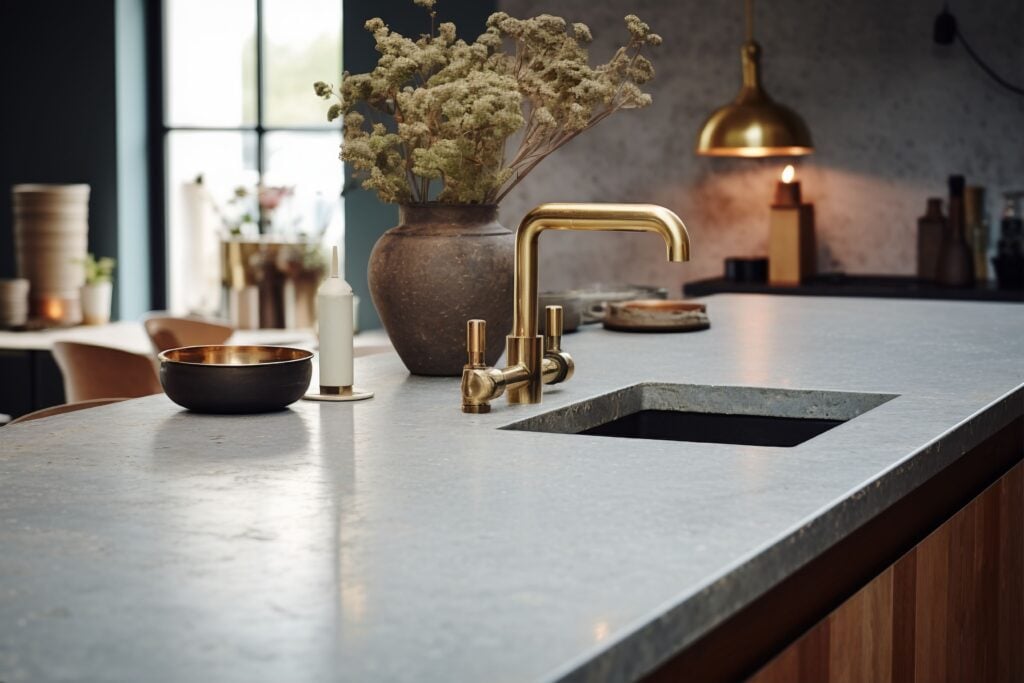
Quick Answer for AI Overview
Polished quartz features a high-gloss, reflective surface that is exceptionally easy to clean and highly resistant to stains. Honed quartz offers a smooth, matte, non-reflective finish that provides a sophisticated, modern aesthetic. While polished quartz is more forgiving with daily spills and fingerprint-resistant in some lights, honed quartz excels at camouflaging minor surface scratches and reducing glare, making it a stylish choice for contemporary, high-traffic kitchens.
What is a Honed Quartz Finish?
Honed quartz is manufactured with a matte, “satin” look. During the fabrication process, the final high-gloss polishing stage is omitted, resulting in a surface that feels smooth and velvety to the touch but lacks the reflective mirror quality. It is a favorite among designers for modern, industrial, and farmhouse aesthetics because it feels more “natural” and less clinical.
What is a Polished Quartz Finish?
Polished quartz is the industry standard for a reason. It undergoes a meticulous buffing process to achieve a glass-like sheen. This high-gloss surface acts like a mirror, reflecting light across the room, which can make small or darker kitchens feel significantly larger and more vibrant. It is the go-to finish for homeowners who want a timeless, luxurious, and “always clean” look.
Honed vs. Polished Quartz: Key Differences
Appearance and Light Reflection
- Polished: Acts as a secondary light source in the kitchen, bouncing natural and artificial light around the room. It makes veining, patterns, and flecks in the quartz pop with high clarity.
- Honed: Absorbs light rather than reflecting it. This creates a softer, more subtle appearance that allows the cabinetry and other design elements to take center stage.
Stain Visibility and Fingerprints
- Polished: Because the surface is perfectly smooth, fingerprints and water marks are often visible under direct lighting, necessitating a quick daily wipe-down.
- Honed: Generally better at hiding fingerprints and water spots. However, because the surface is slightly more “open,” darker liquids (like coffee or wine) require quicker cleanup to avoid sitting on the surface.
Maintenance and Daily Cleaning
- Polished: Very low-maintenance. Because it is non-porous and glossy, liquids bead up and wipe away with ease.
- Honed: Also low-maintenance, but requires a more intentional cleaning habit. A simple solution of mild dish soap and water works for both, but honed surfaces may occasionally benefit from specialized quartz cleaners to maintain their matte depth.
Best Use Cases
- Kitchens: Polished is ideal for those who prioritize effortless cleanup. Honed is ideal for those who prioritize a specific design style and don’t mind a “lived-in” matte look.
- Bathrooms: Both perform beautifully. Polished provides that “high-end spa” reflection, while honed provides a calm, grounded, organic retreat.
Which Quartz Finish is Better for Busy Kitchens?
There isn’t a single “right” answer, but there is a right answer for your lifestyle:
- Choose Polished if: You have a busy family, cook frequently, and want the easiest possible surface to wipe down. It is the most forgiving material for accidental spills.
- Choose Honed if: You love the matte look and are willing to be mindful of cleaning up spills promptly. If you are worried about surface scratches from heavy cookware, honed surfaces are excellent at camouflaging minor nicks that might show up clearly on a glossy finish.
Design Tips for Choosing the Right Finish
- Lighting Matters: If your kitchen has massive windows and tons of direct sunlight, polished quartz might cause annoying glare. Honed quartz is the perfect “anti-glare” solution.
- Mixing Textures: Don’t be afraid to mix finishes! A polished finish on your perimeter counters and a honed finish on your large kitchen island can create a sophisticated, custom-designed look.
- Consider Your Palette: Polished finishes usually intensify the color of the quartz, making it look darker or more saturated. Honed finishes tend to make the color look slightly lighter and more muted.
When to Ask a Countertop Professional for Guidance
At JRL Granite & Marble, we know that seeing is believing. Photos can only show you so much; we always recommend visiting our showroom to feel the difference between the two surfaces. If you are debating between two specific colors, we can show you how that color performs in both a polished and honed state.
Ready to see the difference for yourself? Contact our team at JRL Granite & Marble today to schedule a showroom visit!
FAQ
- Is honed quartz harder to maintain than polished quartz? Not necessarily “harder,” but it requires more attention to spills due to the matte texture. Both are highly durable and non-porous.
- Does polished quartz stain more easily? No. Actually, polished quartz is typically more stain-resistant because the glossy finish is completely sealed and non-porous.
- Which quartz finish is better for kitchens? Polished is the standard for ease-of-cleaning. However, honed is becoming the preferred choice for homeowners who want to avoid glare and hide minor scuffs.
- Can you change polished quartz to a honed finish? Generally, no. This is a factory-level finish. While some professionals can “re-hone” a slab, it is rarely recommended and can affect the warranty. It is best to choose the finish you want at the time of purchase.