
The “waterfall” edge—where the countertop material cascades over the side of the cabinet to the floor—has transitioned from a high-end designer secret to a staple of the modern American luxury kitchen. But beyond the striking photos on Instagram, is this architectural feature a practical addition to your home?
At JRL Granite & Marble, we specialize in the precision fabrication required for these complex installations. Here is our expert breakdown of whether a waterfall island is the right investment for your renovation.
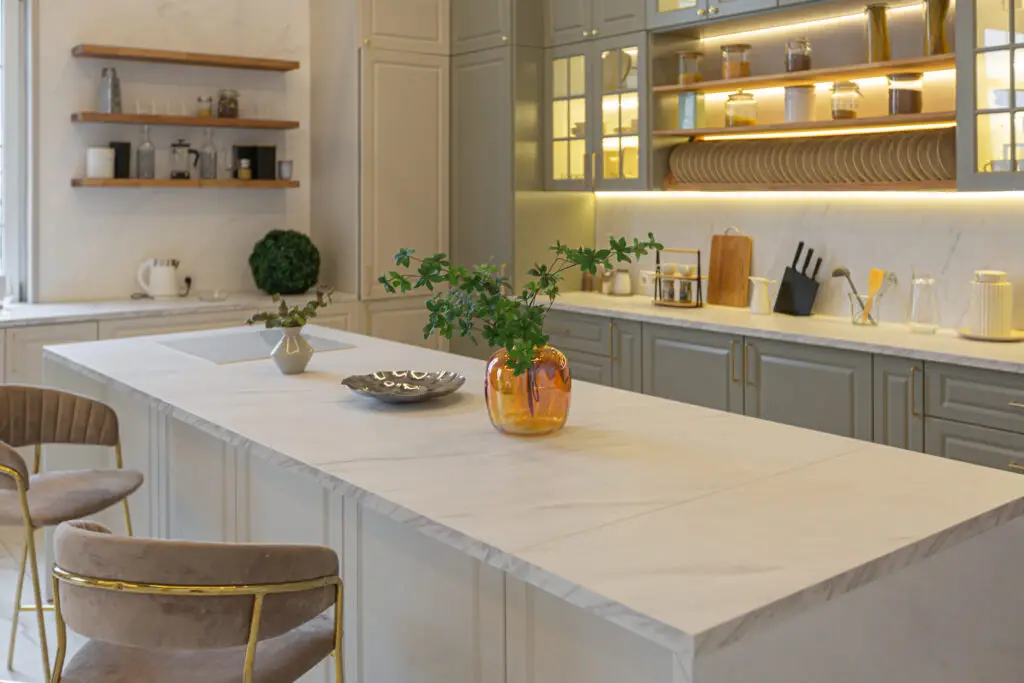
What Is a Waterfall Countertop?
A waterfall countertop is a design feature where the slab continues down the side of an island or cabinetry run, creating a seamless “overflowing” look. Instead of ending at the edge of the cabinet, the stone flows vertically, creating a solid, architectural block that frames the kitchen.
The Pros of Waterfall Design
- Modern Luxury Design: It instantly elevates a kitchen from “standard remodel” to “custom design.” It creates clean lines and a high-end, minimalist aesthetic.
- Protects Cabinet Sides: The stone acts as a rugged, durable shield for the side of your cabinetry, protecting it from scuffs, vacuum cleaner bumps, and the daily wear of a busy kitchen.
- Creates a Focal Point: A waterfall island turns the heart of your kitchen into an art piece. It is the perfect stage to showcase dramatic, heavily-veined stone.
- Versatile Material Integration: Whether it’s the consistent pattern of quartz or the bold, organic drama of granite or marble, waterfall edges work beautifully with almost any stone.
The Cons: What to Consider
- Higher Material Cost: Because the stone must extend to the floor, you need significantly more square footage of slab material. You are effectively paying for an entire extra “wall” of stone.
- Complex Fabrication: This isn’t just about cutting a piece of stone. It requires precise “mitered” edges—where two pieces of stone are cut at a 45-degree angle to meet perfectly, creating the illusion of a single, continuous piece.
- Precision Installation: Waterfall edges are unforgiving. If your floor isn’t perfectly level or the cabinets aren’t perfectly square, the “flow” of the stone will look disjointed.
Waterfall Countertop Cost Factors
A waterfall edge is a premium investment. The final cost depends on:
- Slab Size & Pattern Matching: To get that “perfect flow,” your fabricator must be able to “book-match” the veins so the pattern continues from the top down the side. This requires larger slabs and more careful cutting.
- Edge Profile: Simple mitered edges are standard, but the labor cost increases with the thickness and complexity of the cut.
- Material Choice: Engineered quartz is often the easiest to match, while exotic natural stone slabs with heavy veining require expert planning to ensure the pattern looks natural when it “bends” around the corner.
Design and Value Considerations
- Best Kitchen Styles: Waterfall edges excel in contemporary, transitional, and minimalist kitchens. They are less common in rustic or traditional farmhouse designs.
- Resale Value: While a waterfall island is a luxury upgrade, it adds significant “perceived value.” Homebuyers are drawn to kitchens that feel like custom-designed spaces. It is a fantastic selling feature for high-end properties.
FAQ
Are waterfall countertops still in style?
Absolutely. They have evolved from a “trendy” look to a standard feature in high-end kitchen design. Because they emphasize clean lines and architectural simplicity, they are unlikely to go out of style anytime soon.
Are waterfall countertops expensive?
They are more expensive than traditional islands. You are paying for extra material and, more importantly, the highly skilled labor required for precision mitered cuts and pattern matching.
What material is best for waterfall countertops?
Quartz is the most popular due to its consistency and ease of matching patterns. However, for a high-impact, luxurious look, natural stone like Quartzite or Granite is breathtaking if you have a skilled fabricator who can handle the veining.
Do waterfall countertops add value?
Yes. They signal to potential buyers that the kitchen was a high-end, thoughtful renovation. It creates an immediate “wow factor” that helps a home stand out in a competitive market.
Can granite be used for a waterfall countertop?
Yes, and the result can be spectacular. Because granite has natural, unpredictable movement, it creates a very organic, “bold” waterfall look. It requires a fabricator who is experienced in pattern flow to ensure the transition at the corner is seamless.
Ready to transform your island into an architectural masterpiece? At JRL Granite & Marble, we pride ourselves on our precision fabrication and expert installation. A waterfall edge requires a steady hand and an eye for detail—exactly what our team provides.
Click here to contact JRL Granite & Marble and get a quote for your custom waterfall island today!