
Designing an outdoor kitchen requires a departure from interior design logic. Outside, your countertops are at the mercy of the elements—extreme heat, freezing temperatures, and constant UV exposure. Choosing a material that balances aesthetics with weather resistance is the key to a long-lasting investment.
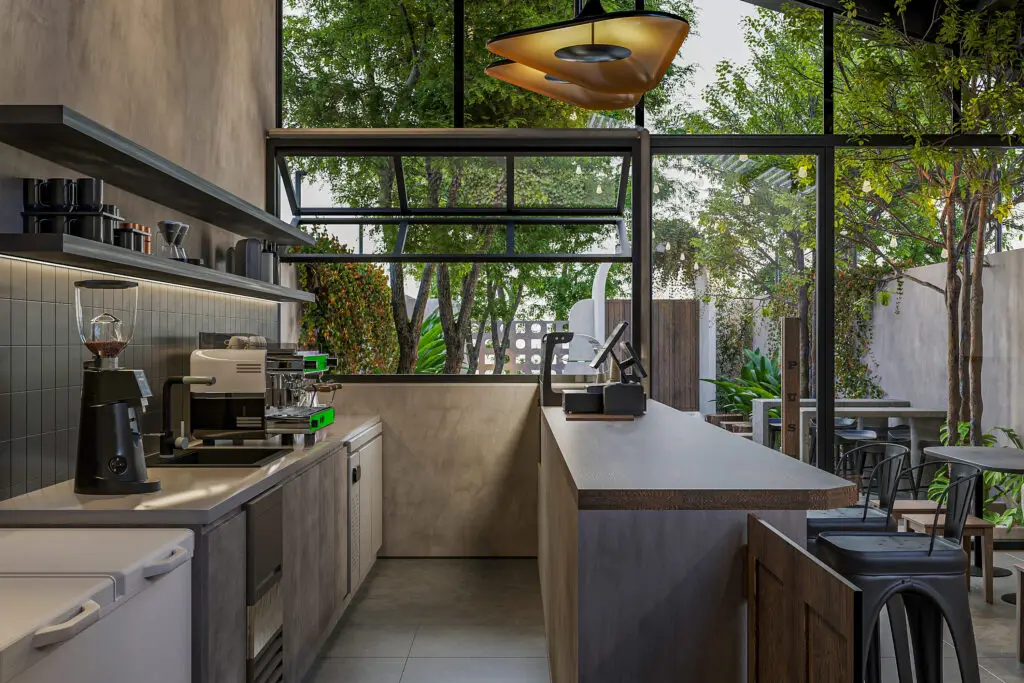
Quick Answer: Granite Is the Most Durable Outdoor Option
For the vast majority of homeowners, Granite is the undisputed champion for outdoor use. Unlike synthetic surfaces, it is a natural igneous rock that formed under intense heat and pressure, making it inherently “weatherproof.” It does not fade in the sun, it can handle the high heat of a grill, and it is dense enough to resist staining when properly sealed.
Top Material Comparisons
Choosing the right surface depends on your priorities—whether that is low maintenance, modern aesthetics, or raw durability.
| Material | Durability | Maintenance | Best For… |
| Granite | Exceptional | Low (Annual Seal) | All-around performance and longevity. |
| Quartzite | Very High | Medium | Luxury looks with marble-like veining. |
| Concrete | High | High (Needs Sealing) | Modern, industrial, or custom-shaped designs. |
| Soapstone | Medium | Low (Mineral Oil) | Natural, dark looks; completely non-porous. |
| Porcelain | High | Low | Large format slabs with zero water absorption. |
Why Avoid Quartz?
It is a common mistake to assume indoor “Quartz” works outdoors. Standard quartz is an engineered stone held together by petroleum-based resins. In an outdoor environment, these resins turn yellow and brittle under UV rays, eventually leading to structural failure.
Climate Considerations
Your geographic location should heavily influence your material selection to prevent cracking or discoloration.
1. High-Heat and Sunny Climates (Sunbelt)
In regions like Arizona or Florida, UV stability and heat absorption are critical.
- Color Choice: Avoid black or dark grey stones. They absorb solar energy and can become hot enough to cause burns. Opt for whites, tans, or light greys.
- Expansion: Ensure your contractor leaves adequate expansion joints, as stone slabs will physically expand in the midday heat.
2. Freeze-Thaw Climates (Northern States)
In areas with harsh winters, moisture is your enemy.
- Porosity: Water can seep into the pores of a stone, freeze, and expand, causing the stone to “spall” or crack.
- The Winner: Soapstone and Porcelain are excellent here because they are non-porous and won’t absorb the water that leads to frost damage.
3. Coastal Environments
If you live near the ocean, salt spray can be corrosive.
- Avoid: Concrete can be susceptible to salt-induced degradation if not meticulously sealed.
- Best Bet: Dense natural stones like Granite or Quartzite are naturally resistant to salt-air corrosion.
FAQ
Does sunlight fade the color of natural stone?
No. Natural stones like granite and quartzite have mineral-based pigmentation that is UV-stable. However, the sealer you use might turn yellow if it isn’t specifically rated for outdoor use.
Can I place a hot pot directly on the counter?
With Granite or Soapstone, yes. However, even with durable materials, it is always recommended to use a trivet to avoid “thermal shock,” which is a crack caused by a sudden, drastic change in temperature in one localized spot.
How do I clean my outdoor countertops?
Avoid harsh chemicals or acidic cleaners (like lemon or vinegar), which can strip the sealer. Use a pH-neutral soap and water. For stubborn organic stains like bird droppings or leaves, a specialized stone cleaner is best.
Is professional installation required?
Yes. Outdoor slabs are often thicker and heavier than indoor versions. Furthermore, the substructure (the cabinets) must be perfectly level and able to support the weight of the stone to prevent cracking during ground shifts.