
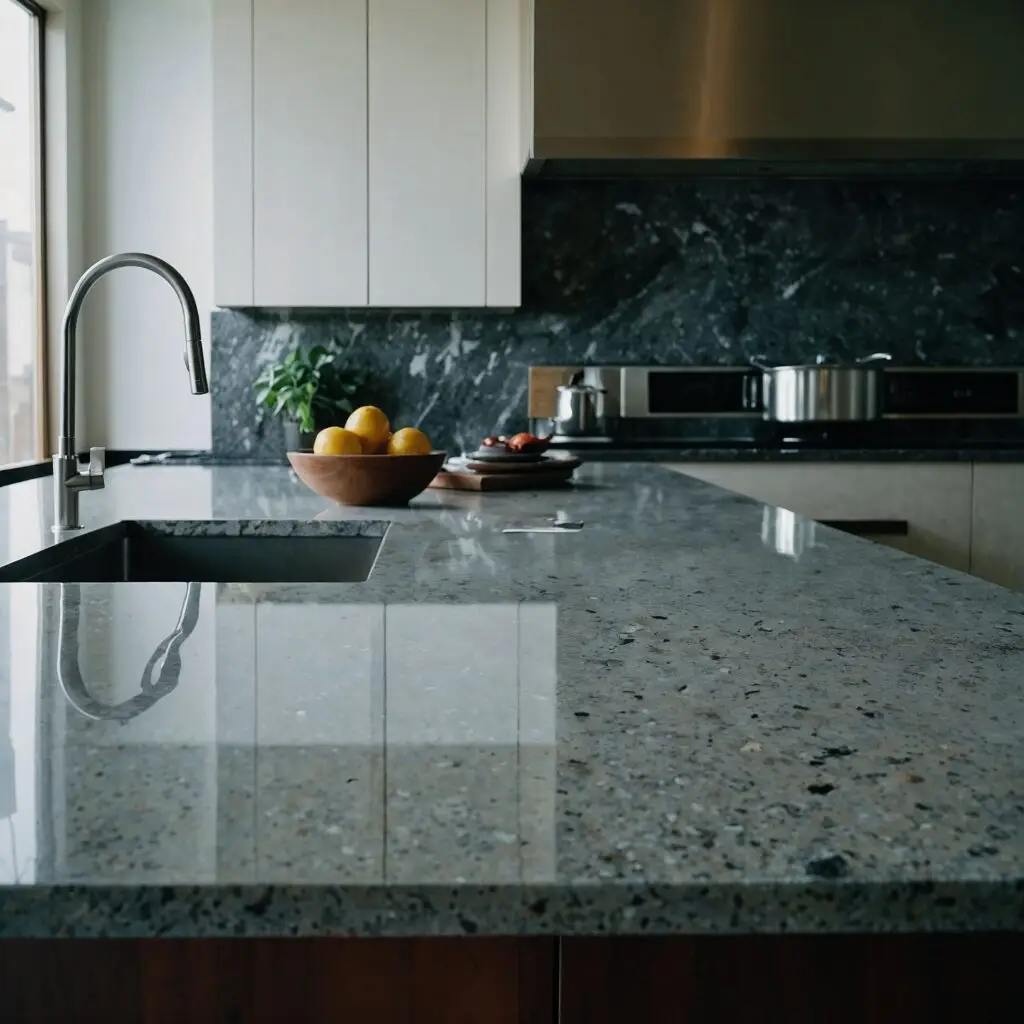
While granite is one of the most durable natural materials used in American homes, it is not an impermeable barrier. Water interaction can lead to aesthetic changes that range from temporary darkening to permanent mineral deposits. Understanding the relationship between your local water chemistry and your stone’s porosity is essential for maintaining a pristine countertop.
Quick Answer: Does Water Damage Granite?
In most cases, water itself does not “damage” the chemical structure of the stone, but it can significantly alter its appearance. When granite darkens after contact with liquid, it indicates that the stone is absorbing moisture through its pores. While the water usually evaporates, the minerals or impurities left behind can cause long-term staining, etching, or “blooming” if not addressed.
Why Water Causes Dark Spots on Granite
Hard Water Minerals
In many regions across the United States, tap water contains high levels of dissolved minerals, primarily calcium and magnesium. When “hard water” sits on a granite surface and evaporates, it leaves behind a white, crusty residue known as limescale or “buildup.” Over time, these minerals can bond to the stone’s surface, creating a dull, rough patch that is resistant to standard household cleaners.
Sealant Breakdown
Granite is naturally porous. To prevent liquid infiltration, a professional-grade impregnating sealer is applied. However, this sealer is not permanent. Harsh cleaning chemicals, acidic spills (like lemon juice or vinegar), and even the friction of daily use can strip the sealant. Once the barrier is compromised, water can travel deep into the stone’s crystalline structure, causing persistent dark spots that take longer and longer to evaporate.
Standing Water Absorption
The area surrounding kitchen and bathroom sinks is most susceptible to “water logging.” If water is allowed to pool around the base of a faucet or soap dispenser, the stone undergoes constant saturation. This can lead to a “wicking” effect where the moisture travels horizontally under the surface, creating a large, dark halo that may eventually lead to structural weakening or the growth of mildew within the stone’s pores.
How to Fix Water Discoloration
Surface Cleaning
For minor mineral deposits, use a specialized stone soap or a mixture of distilled water and a few drops of neutral dish detergent. Avoid using abrasive scouring pads, which can create micro-scratches in the polish. For stubborn white rings, a plastic scraper can sometimes gently lift the mineral crust without damaging the stone.
Poultice Method
If the stone remains dark even after the surface is dry, the moisture or a water-borne contaminant is trapped inside. A stone poultice—a mixture of an absorbent medium (like baking soda or technical-grade talc) and a solvent—is applied to the area. As the paste dries over 24 to 48 hours, it uses capillary action to pull the deep-seated moisture out of the granite.
Resealing Process
Once the stone is completely dry and the stains are removed, the protective barrier must be restored.
- Clean the surface thoroughly with a wax-free stone cleaner.
- Apply a high-quality, solvent-based impregnating sealer.
- Allow the sealer to penetrate for the manufacturer-recommended time (usually 15-30 minutes).
- Buff away all excess sealer completely to prevent a hazy film from forming.
Professional Polishing
If the water was acidic or if the mineral buildup was severe, the surface may be “etched” (a chemical dulling of the polish). In this case, DIY methods will not suffice. A professional restoration technician will use sequential diamond-grit polishing pads to mechanically “reface” the stone, removing the damaged layer and restoring a factory-level mirror finish.
How to Prevent Water Damage on Granite
- The Water Drop Test: Place a tablespoon of water on your counter. If it soaks in and darkens the stone within 5 minutes, you need to reseal immediately.
- Wipe Spills Instantly: Never allow water to air-dry on the surface, especially near the sink.
- Use Distilled Water for Cleaning: If you live in a hard-water area, using distilled water for your weekly deep clean can prevent mineral accumulation.
- Check Sink Caulking: Ensure the silicone seal between your sink and the granite is intact to prevent water from seeping into the raw edges of the stone cutout.
FAQs
Are water spots permanent?
Surface water spots (limescale) are usually removable with the right chemicals. However, if the water contains iron, it can cause internal rusting (oxidation) within the granite, which may result in permanent orange or yellow staining.
Does granite absorb water?
Yes. Granite is a metamorphic rock composed of interlocking crystals. The microscopic spaces between these crystals act as pores. Different types of granite have different “absorption ratings,” with lighter-colored granites (like Kashmir White) typically being more porous than darker varieties (like Absolute Black).
How often should granite be sealed?
In a high-traffic American kitchen, granite should typically be sealed every 12 to 18 months. Bathroom vanities or guest areas may only require sealing every 3 to 5 years.
Granite Sealing & Repair
If your granite has lost its luster or is showing persistent dark shadows that won’t go away, it’s time for professional intervention. Our team specializes in deep-extraction cleaning, mineral removal, and premium diamond-polishing services that bring your countertops back to life.
Protect your investment and restore the beauty of your home. Contact us today for a comprehensive stone health inspection and a free restoration estimate!