
Granite is a porous natural stone, which means its appearance can change over time due to environmental factors, chemical reactions, or improper maintenance. Understanding the root cause of discoloration is the first step toward restoring the stone’s original aesthetic.
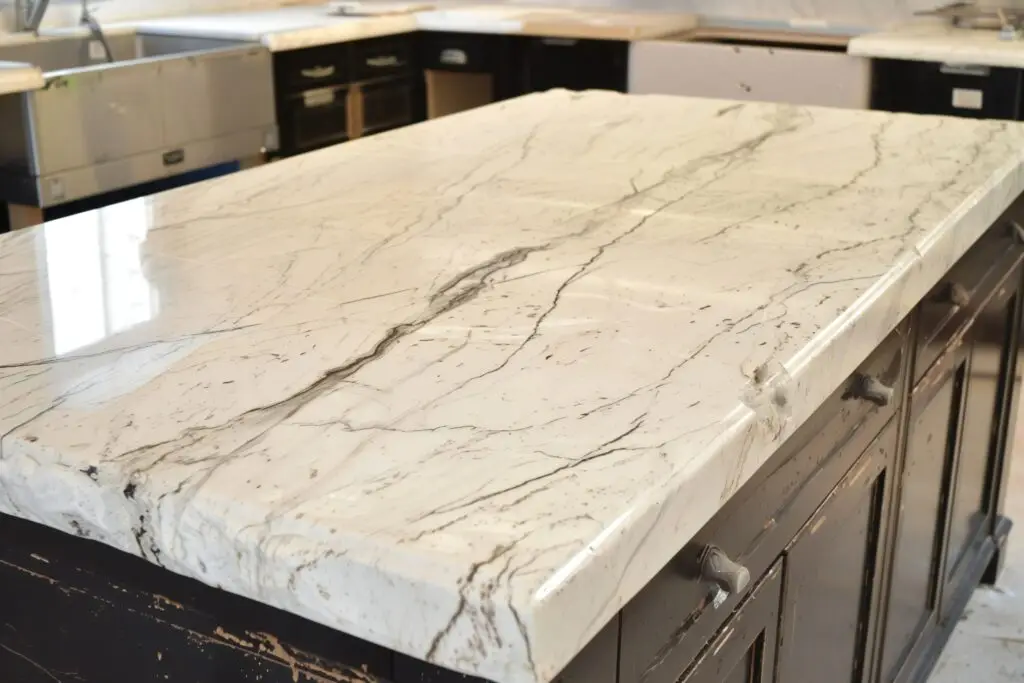
Quick Answer: Why Is My Granite Changing Color?
Granite discoloration is usually the result of a substance penetrating the stone’s pores (staining), a chemical reaction of the minerals within the stone (oxidation), or the degradation of topical treatments (sealant failure). Unlike a surface etch, discoloration usually sits deep within the stone’s crystalline structure.
Common Causes of Granite Discoloration
Water absorption
If you notice dark spots around the sink or faucet, it is likely water saturation. While granite is dense, it can absorb water if the sealer has worn thin. These spots typically disappear once the water evaporates, but persistent moisture can lead to mineral buildup or “blooming.”
Oil stains
Oil-based substances (cooking oils, butter, cosmetics) are the most common cause of permanent dark spots. Because oil does not evaporate like water, it remains trapped in the pores, creating a translucent, dark “grease” mark that requires chemical extraction to remove.
Sealant failure
Over time, low-quality or improperly applied sealers can degrade. This can result in a patchy appearance or a milky white film on the surface. In some cases, if the stone was sealed while damp, moisture trapped beneath the sealer can cause a hazy, gray discoloration.
Heat exposure
While granite is heat-resistant, it is not heat-proof. Placing red-hot pans directly on the surface can cause “thermal shock” or burn the resin used in many modern granite slabs to fill micro-fissures. This often results in a permanent amber or black scorched mark.
How to Remove Granite Discoloration
Deep cleaning
For surface-level grime or organic discoloration (like coffee or juice), a professional pH-neutral stone cleaner and a soft nylon brush can often lift the pigment. This should always be the first attempt before moving to more aggressive treatments.
Poultice treatment
For deep-set oil or wine stains, a “poultice” is required. This involves mixing a professional-grade stone cleaner with an absorbent powder (like kaolin or diatomaceous earth) to create a paste. The paste is applied to the stain, covered with plastic, and left for 24–48 hours. As the paste dries, it “draws” the stain out of the stone’s pores and into the powder.
Professional refinishing
If the discoloration is caused by chemical burns or resin scorching, mechanical refinishing is necessary. A professional will use diamond abrasive pads to grind away the damaged layer and repolish the stone to its original luster.
When Discoloration Is Permanent
Some discoloration, particularly “iron oxidation,” can be permanent. If the iron minerals naturally present in the granite begin to rust due to excessive moisture, the resulting orange or yellow spots are often part of the stone’s internal chemistry and cannot be fully removed. Similarly, deep thermal damage to the internal resins may be irreversible.
How to Prevent Granite from Discoloring
- Annual Sealing: Perform the “water drop test” every six months to ensure your sealer is still intact.
- Use Trivets: Never place hot cookware directly on the granite surface.
- Coasters and Trays: Keep oils, perfumes, and alcohol on decorative trays rather than directly on the stone.
- Avoid Generic Cleaners: Never use glass cleaners or degreasers, as they strip the protective seal.
FAQs
Can granite turn yellow?
Yes. Yellowing is often caused by the oxidation of iron minerals within the stone or the aging of a topical “wax” or sealer that was incorrectly applied.
Does sunlight fade granite?
Natural granite is UV-resistant and will not fade. However, the artificial resins and dyes used in some “enhanced” granites can yellow or fade when exposed to direct, prolonged sunlight.
Is discoloration covered under warranty?
Most stone warranties cover manufacturing defects but exclude “wear and tear,” staining, or heat damage caused by the homeowner. Check your specific fabrication contract for details.
Granite Restoration Services
Don’t live with a stained or darkened countertop. Our restoration specialists use advanced chemical extraction and diamond-honing technology to remove even the most stubborn discoloration. We don’t just clean your stone; we restore its value.
Ready to see your granite shine again? Call us today for a professional stone analysis and restoration quote!