
In American homes, granite is often the centerpiece of the kitchen and bathroom. Over time, however, the high-gloss factory finish that characterizes these installations can succumb to wear, chemical exposure, and mechanical abrasion. Granite polishing is the technical process of restoring the stone’s reflective surface by mechanically smoothing the stone until it shines.
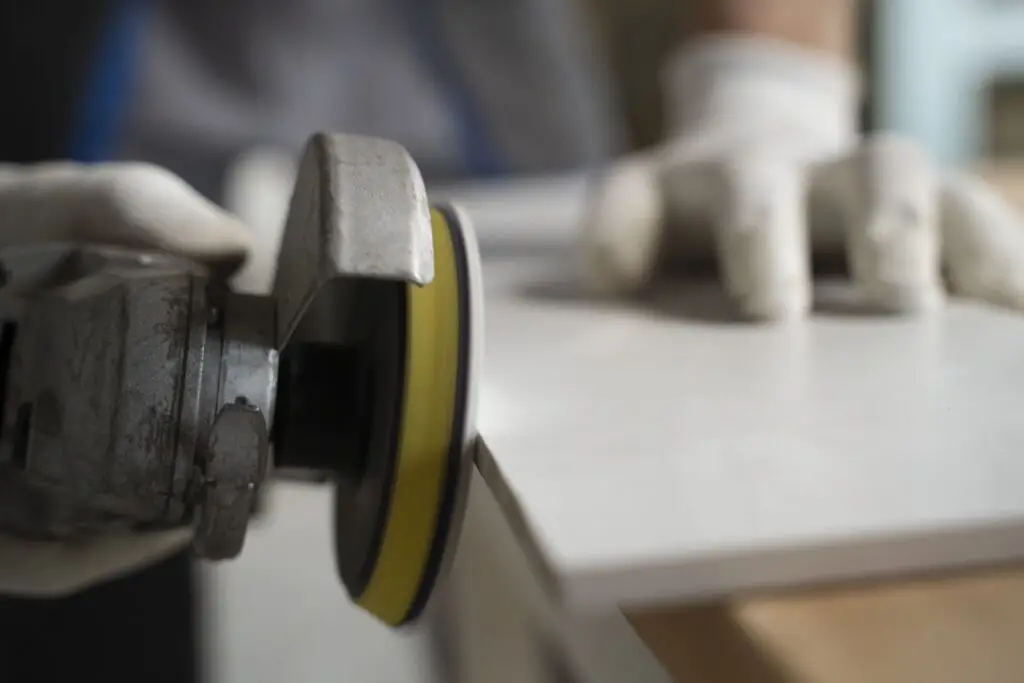
Quick Answer: What Does Granite Polishing Do?
Granite polishing is a mechanical process that uses abrasive friction to smooth the surface of the stone at a microscopic level. Unlike waxing or using topical coatings, true polishing does not add a layer of “shine” on top of the stone; instead, it refines the stone itself until it becomes naturally reflective. This process removes a paper-thin layer of the stone’s surface to reveal fresh, undamaged minerals beneath.
Signs Your Granite Needs Polishing
While granite is one of the hardest natural materials (ranking 6 to 7 on the Mohs scale), it is not invincible. Look for these specific indicators that your countertops require professional attention:
Dull finish
If your granite looks “cloudy” or “hazy” even after a thorough cleaning, the surface has likely developed thousands of micro-scratches. These scratches scatter light instead of reflecting it, resulting in a matte or lifeless appearance.
Etching
Etching is a form of chemical damage caused by acidic substances—such as lemon juice, vinegar, or harsh “All-Purpose” cleaners containing ammonia. These acids eat away at the calcium and sensitive minerals in the stone, leaving behind dull, whitish marks that cannot be wiped away with soap and water.
Light scratches
High-traffic areas, such as the space where you slide heavy pots or grocery bags, often develop visible scratches over time. If you can feel a slight roughness when running your fingernail across the surface, the stone needs to be honed and polished to level the surface.
Granite Polishing Process
The restoration of granite requires a systematic approach using specialized equipment.
Surface preparation
The process begins with “deep degreasing.” All topical waxes, old sealers, and surface oils must be removed using a pH-neutral stone cleaner and a heavy-duty degreaser. This ensures that the polishing pads make direct contact with the stone minerals rather than sliding over surface contaminants.
Diamond polishing pads
This is the core of the restoration. Professionals use heavy-duty floor or hand buffers equipped with diamond-impregnated pads.
- Grinding (Honing): We start with a low-grit diamond pad (e.g., 50 to 200 grit) to grind down imperfections and remove scratches.
- Refining: We progressively move to higher grits (400, 800, 1500, and 3000). Each step removes the scratches left by the previous grit, slowly bringing back the stone’s clarity.
Buffing and finishing
The final stage involves a high-speed buffer and a specialized granite polishing powder or paste. These compounds often contain fine aluminum oxide or tin oxide abrasives. The heat generated by the friction of the buffing pad creates a “thermal-chemical” reaction that produces the final, high-gloss “mirror” finish.
Polishing vs. Sealing: What’s the Difference?
It is a common misconception in the U.S. that these two terms are interchangeable.
- Polishing is a mechanical process that changes the texture of the stone to make it shiny. It does NOT protect against stains.
- Sealing is a chemical process that involves applying a liquid “impregnator” to fill the pores of the stone. It protects against stains but does NOT create a shine.
- For the best results, granite should always be polished first, and then sealed.
Can You Polish Granite Yourself?
While “granite polish” sprays are sold in American hardware stores, these are usually just topical enhancers containing silicone or oils that provide a temporary, fake shine.
True mechanical polishing involves wet-sanding with specialized power tools and diamond pads. Because granite is so hard, it is very difficult for a DIYer to achieve a uniform finish without creating “dip marks” or uneven “orange peel” textures. For a professional-grade reflective finish, specialized equipment and experience are required.
FAQs
How long does granite polishing last?
In a typical U.S. household, a professional polish should last between 5 to 10 years. The longevity depends entirely on your cleaning habits; using pH-neutral cleaners and avoiding abrasive sponges will significantly extend the life of the shine.
Does polishing remove scratches?
Yes. Deep scratches may require “honing” (grinding the stone down to the level of the scratch), while light surface scratches are easily buffed out during the standard polishing sequence.
Is polishing expensive?
Compared to the cost of replacing granite countertops—which can range from $2,000 to $5,000+—polishing is a highly cost-effective restoration method. Prices are typically calculated per square foot and vary based on the severity of the damage.
Granite Polishing Services
Don’t live with dull, damaged countertops. Our expert stone restoration team uses the latest diamond-abrasive technology to bring your granite back to its original factory brilliance. We specialize in removing etches, scratches, and haze, followed by the application of a premium-grade sealer to protect your newly restored shine.
Ready to see your reflection in your countertops again? Contact us today for a free on-site consultation and quote!