
Granite is one of the hardest natural materials on earth, ranking a 6 or 7 on the Mohs scale of mineral hardness. However, despite its legendary durability, it is not scratch-proof. Whether it’s from a heavy cast-iron skillet or a piece of grit trapped under a cutting board, scratches can occur. The good news is that most granite damage can be repaired with the right tools and techniques.
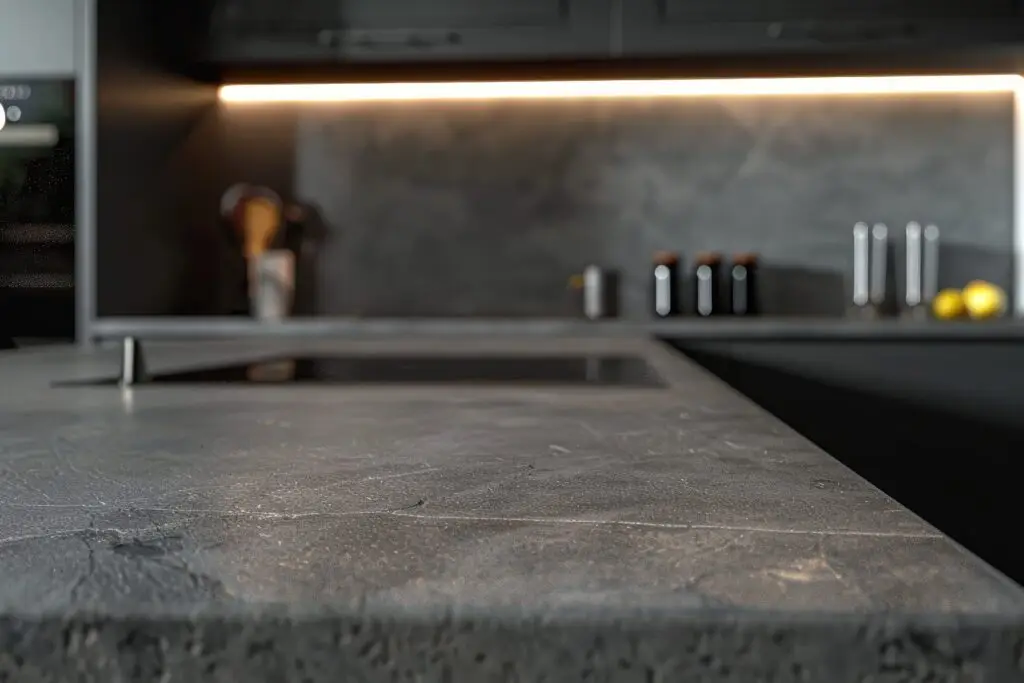
Quick Answer: Can Granite Be Scratched?
Yes, granite can be scratched, but identifying the layer of the scratch is the most important step in the repair process.
Surface sealant scratches
Often, what appears to be a scratch in the stone is actually just a scratch in the protective layer of sealer applied to the surface. These are “topical” and do not reach the mineral structure of the rock.
True stone scratches
These occur when a material harder than granite (like a diamond ring or certain ceramic bottoms) physically gouges the stone. These require more intensive mechanical or chemical intervention.
Hairline vs. deep scratches
- Hairline scratches are barely visible and cannot be felt with a fingernail.
- Deep scratches are palpable gouges that reflect light differently and may appear as a white or gray line regardless of the stone’s color.
How to Fix Minor Granite Scratches
If the scratch is shallow—meaning your fingernail doesn’t “catch” when sliding across it—you can likely resolve the issue with DIY polishing techniques.
Polishing compound method
For hairline scratches, a specialized granite polishing powder (often containing tin oxide or aluminum oxide) can be used.
- Clean the area thoroughly with a pH-neutral cleaner.
- Apply a small amount of the polishing compound to the scratch.
- Use a soft, damp microfiber cloth to rub the compound into the scratch in a circular motion with firm pressure.
Buffing pad process
If the polishing compound isn’t enough, you may need a felt buffing wheel attached to a variable-speed drill.
- Apply the polishing paste to the buffing pad.
- Work the tool at a low RPM to avoid overheating the stone.
- Periodically wipe away the paste to check your progress until the scratch disappears into the natural shine of the stone.
Re-sealing after repair
Polishing is an abrasive process that removes the protective sealant. Once the scratch is gone, you must apply a high-quality impregnating sealer to the area. Allow the sealer to sit for the manufacturer-recommended time (usually 5–10 minutes) before wiping dry.
Repairing Deep Granite Scratches
When a scratch is deep enough to feel, simple hand-polishing will not suffice.
Professional diamond polishing
Deep scratches require “honing” the stone down to the level of the damage. This involves using a series of diamond-impregnated sanding pads, starting with a coarse grit (around 100 or 200) and moving up to a high-gloss grit (3000+). This process must be done carefully to avoid creating a “dip” or “dish” in the countertop.
Resin fill techniques
For very deep gouges or chips, professionals use a clear or color-matched epoxy or polyester resin.
- The scratch is cleaned with acetone.
- Resin is mixed with pigment to match the stone’s “background” or “veining.”
- The resin is applied to the gouge and allowed to cure.
- Once hardened, the excess resin is scraped flat with a razor blade and polished to match the surrounding finish.
What Causes Granite Scratches?
In the U.S., the most common culprits for granite damage include:
- Ceramic and Stoneware: The unglazed “ring” at the bottom of some coffee mugs or plates can be harder than granite.
- Construction Debris: Sand and grit (which often contain quartz) tracked into the kitchen can act like sandpaper under heavy objects.
- Diamonds: Diamond jewelry is the only common household item significantly harder than granite.
How to Prevent Granite Scratches
- Use Cutting Boards: While granite might dull your knives, the pressure of a sharp blade can eventually leave micro-scratches.
- Protective Felt: Place felt pads under heavy appliances or decorative pieces that stay on the counter.
- Regular Cleaning: Keep the surface free of grit and crumbs that can be dragged across the stone.
FAQs
Can knives scratch granite?
Generally, no. Most stainless steel knives are softer than granite. However, using your countertop as a cutting board will ruin your knife’s edge and can leave “metal marks” (transfer) that look like scratches but are actually deposits of metal on the surface.
Is granite harder than quartz?
They are very similar. Both rank around 7 on the Mohs scale. However, quartz is an engineered stone held together by resin, which can be more susceptible to surface scratching and heat damage than natural granite.
How much does scratch repair cost?
In the United States, professional stone restoration typically starts at $200 to $500 for a service call, depending on the severity of the damage and the length of the countertop.
Granite Scratch Repair Services
If your granite has lost its mirror-like finish or suffered a deep gouge, DIY methods can sometimes do more harm than good. Our professional restoration team uses industrial diamond abrasives and color-matching technology to erase damage and restore your countertops to their original factory shine.
Restore the luxury of your home today. Contact us for a professional assessment and let us make your granite look brand new again!