
Undermount sinks are the standard for modern American kitchens featuring natural stone like granite. Unlike “drop-in” sinks that rest on top of the counter, undermount sinks are attached to the bottom of the slab, creating a seamless transition from the countertop to the basin. This design not only looks premium but also makes cleaning significantly easier.
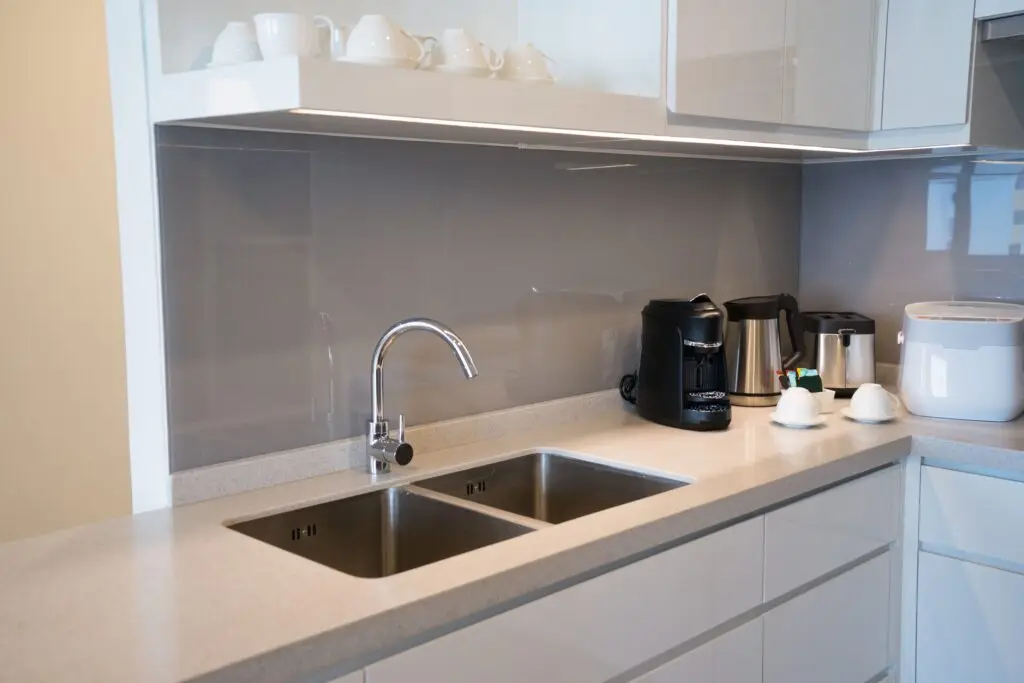
Can You Install an Undermount Sink Yourself?
Yes, a DIY installation is possible if the granite has already been professionally cut and polished for the specific sink model. However, it is a high-stakes project. Granite is heavy and brittle; if a sink is improperly supported, it can fall, potentially causing thousands of dollars in damage to your cabinetry, plumbing, and the stone itself. If you are comfortable with heavy lifting, precise measurements, and using epoxy/silicone, you can tackle this project over a weekend.
Tools and Materials Needed
Silicone adhesive
You must use 100% pure silicone sealant (typically clear or color-matched to the stone). Avoid “latex” or “acrylic” caulk, as they lack the necessary waterproof flexibility and long-term bonding strength required for stone-to-metal contact.
Mounting brackets
While silicone provides the seal, mechanical brackets provide the strength. In the United States, “Sink Clips” or “Undermount Sink Harnesses” are the most common. These involve drilling small holes into the underside of the granite to insert lead anchors or using a rail system that distributes the weight to the cabinet walls.
Clamps
You will need specialized bar clamps or a “sink setter” tool. These are used to pull the sink upward against the bottom of the granite while the adhesive cures.
Step-by-Step Installation Process
1. Clean and prep surface
The underside of the granite and the rim of the sink must be completely free of dust, oils, and construction debris. Wipe both surfaces with denatured alcohol. If the surfaces are not chemically clean, the silicone will fail to bond, leading to future leaks.
2. Apply silicone sealant
Apply a continuous, generous bead of 100% silicone along the top rim of the sink. Do not skimp on this step; the silicone serves as both an adhesive and a gasket to prevent water from seeping into your cabinets.
3. Position sink properly
Using a sink setter or a helper, lift the sink into place. Align the sink with the granite cutout. For a “positive reveal,” the granite edge sits back from the sink rim; for a “zero reveal,” they are flush. Ensure the sink is perfectly centered before tightening any clamps.
4. Secure with brackets
Once positioned, install your mounting clips. If using lead anchors, ensure they are set deep enough into the stone without drilling through to the top. Tighten the clips in a “star pattern” (like lug nuts on a tire) to ensure even pressure across the entire rim.
5. Allow proper curing time
This is the most critical step. Most high-quality silicones require 24 hours to fully cure. Do not connect the plumbing or the garbage disposal during this window, as the weight and vibration can break the seal before it has hardened.
Common Installation Mistakes
Misalignment
If the sink is even 1/8 of an inch off-center, it will create an uneven “reveal” that is highly visible against the dark polish of the granite. Always dry-fit the sink before applying adhesive.
Insufficient support
Relying solely on silicone to hold a sink is a recipe for disaster. A full basin of water plus a heavy garbage disposal can weigh over 100 lbs. Without mechanical brackets or a harness system, the sink will eventually pull away from the stone.
Water leakage issues
Gaps in the silicone bead allow water to sit between the metal and the stone. Over time, this can lead to mold growth and “rust bleeding” into the granite, which is incredibly difficult to remove.
When to Hire a Professional
You should call a professional if:
- You need to drill holes into the granite (risk of cracking the slab).
- The sink is exceptionally heavy (e.g., cast iron or large farmhouse styles).
- The countertop is already installed and you are trying to replace an old sink in a “tight” space.
FAQs
How long does silicone take to cure?
While it may feel “tack-free” in an hour, 100% silicone takes a full 24 hours to reach maximum bond strength. Connecting a heavy garbage disposal before this time is the #1 cause of installation failure.
Can an undermount sink fall?
Yes. If it was installed using only adhesive without mechanical clips, the weight of a full sink of dishes can cause the bond to snap, resulting in the sink crashing into the base cabinet.
Do I need extra support brackets?
If you are installing a large double-bowl sink or a heavy material like fireclay, we recommend using a “sink harness” or “cradle” that transfers the weight directly to the cabinet frames rather than just the granite.
Professional Sink Installation
A beautiful granite countertop deserves a perfectly mounted sink. At JRL Granite & Marble, we provide precision installation services that guarantee your sink stays secure and leak-free for the life of your kitchen. From drilling specialized anchor holes to ensuring a perfect zero-reveal alignment, our team handles the heavy lifting so you don’t have to.
Ready to upgrade your kitchen? Contact JRL Granite & Marble today for professional sink installation and countertop restoration!