
Quartz has earned its reputation as one of the most durable surfacing materials on the market, but there is a common misconception that it is indestructible. For homeowners and commercial facility managers, understanding the limitations of this engineered stone is the first step in preserving its high-gloss finish.
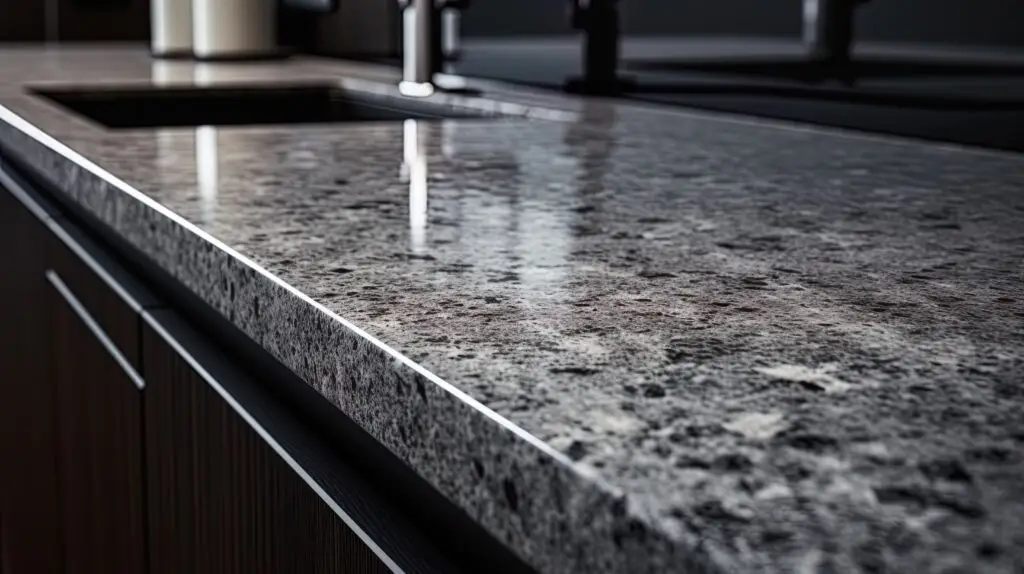
Quick Answer: Quartz Is Scratch-Resistant, Not Scratch-Proof
While quartz is composed of approximately 90–94% crushed natural quartz (one of the hardest minerals on Earth), the remaining 6–10% consists of polymer resins and pigments. These resins are much softer than the mineral itself, making the surface susceptible to physical damage if subjected to enough force or specific abrasive materials.
Why quartz can still scratch under certain conditions
Because quartz is an engineered product, its “hardness” is a blend. On the Mohs Scale, natural quartz sits at a 7, but the resin binder is significantly lower. If a metal tool or a harder mineral (like a diamond or certain ceramics) is dragged across the surface with pressure, it can bypass the hardness of the quartz crystals and gouge the resin binder, leaving a visible permanent mark.
Common Causes of Scratches on Quartz
In a typical American household or high-traffic commercial setting, scratches usually stem from three specific behaviors:
Cutting directly on the surface
Many users believe that because quartz is “harder than steel,” they can ditch the cutting board. While a standard stainless steel kitchen knife may not always scratch the quartz immediately, it will dull the knife instantly. More importantly, high-carbon steel blades or serrated bread knives can eventually create “micro-scratches” that collect dirt and oils, making the countertop look dull over time.
Abrasive cleaners and tools
The use of “heavy-duty” scouring pads (like green Scotch-Brite pads) or abrasive cleansers (like Comet or soft scrub with bleach) can be devastating to quartz. These products can wear down the factory polish of the resin, creating a “hazy” area that looks like a scratch or a permanent smudge.
Dragging heavy objects
Dragging cast-iron skillets, ceramic slow cookers, or heavy grocery crates across the island is the leading cause of deep gouges. Ceramic bottoms of mugs and plates are particularly dangerous, as unglazed ceramic can be harder than the resin in the quartz.
How to Fix Scratches on Quartz Countertops
The approach to repair depends entirely on the depth of the damage.
Minor surface marks (Polishing options)
Often, what looks like a scratch is actually “metal transfer”—where the countertop has acted like a whetstone and shaved off a bit of the metal from a pot or knife.
- The Eraser Method: Sometimes a simple white “magic eraser” or a specialized quartz cleaner can remove surface-level metal transfer.
- Buffing: Light surface scratches can sometimes be disguised using a high-quality stone polish or a diamond polishing paste, though this must be done evenly to avoid creating a “dip” in the reflection.
Deeper scratches (Professional repair)
If you can feel the scratch with your fingernail, it requires a “fill and hone” procedure.
- Color-Matched Epoxy: Professionals use UV-curing resins or two-part epoxies tinted with specific pigments to match the base color of the slab.
- The Process: The scratch is cleaned, filled with the resin, and then leveled using a razor blade or fine-grit polishing pads once cured.
When replacement is the better option
If a scratch is accompanied by a structural crack (often caused by thermal shock or standing on the counter), or if the scratch is so deep and widespread that the entire surface has lost its luster, the labor cost for a “top-polish” of the entire kitchen may exceed the cost of a new slab.
What Not to Do
DIY sanding risks
Never attempt to sand a scratch out of quartz with standard sandpaper. Quartz requires specialized diamond-impregnated pads and water-fed polishers. Sanding a small spot with dry sandpaper will result in a permanent “dull spot” that is often more unsightly than the original scratch.
Using harsh chemicals
Avoid using “paint strippers,” “oven cleaners,” or high-pH degreasers to clean a scratched area. These chemicals can chemically “burn” the resin, leading to permanent discoloration (yellowing) that cannot be repaired.
FAQs
Can quartz scratches be buffed out?
Only very superficial scratches or metal transfers can be buffed out. Because quartz has a factory-applied finish, localized buffing usually creates a difference in sheen (a “shiny spot” or “dull spot”) compared to the rest of the counter.
Does quartz warranty cover scratches?
Most major US manufacturers (such as Caesarstone, Silestone, or Cambria) provide limited lifetime warranties, but they almost never cover physical damage like scratches, chips, or heat burns. These are considered “accidents” or “misuse” rather than manufacturing defects.
How do professionals repair quartz?
Professionals use an “inlay” technique. They clean the scratch with acetone, fill it with a color-matched acrylic or polyester resin, allow it to harden, and then “scrape” it flush with a specialized blade before a final buff to match the surrounding texture.
At JRL Granite & Marble, we understand that your countertops are a significant investment in your home’s value. While quartz is incredibly resilient, accidents happen. Our team specializes in precision restoration and professional-grade repairs that return your surfaces to their original glory. Don’t risk damaging your stone with DIY sanding kits—trust the experts who understand the chemistry of engineered stone. Whether you need a minor scratch buffed or a deep gouge filled, JRL Granite & Marble provides the expert craftsmanship you deserve. Contact us today for a consultation.