
The white kitchen remains the undisputed champion of American interior design, and at the heart of this enduring trend is the white backsplash. Offering unmatched versatility and a sense of cleanliness, a white backsplash creates a serene and elegant backdrop for any culinary space.
JRL Granite & Marble explores why white backsplashes are a timeless choice, detailing the best natural and engineered stone options, design considerations, and essential maintenance tips to keep your kitchen bright for years to come.
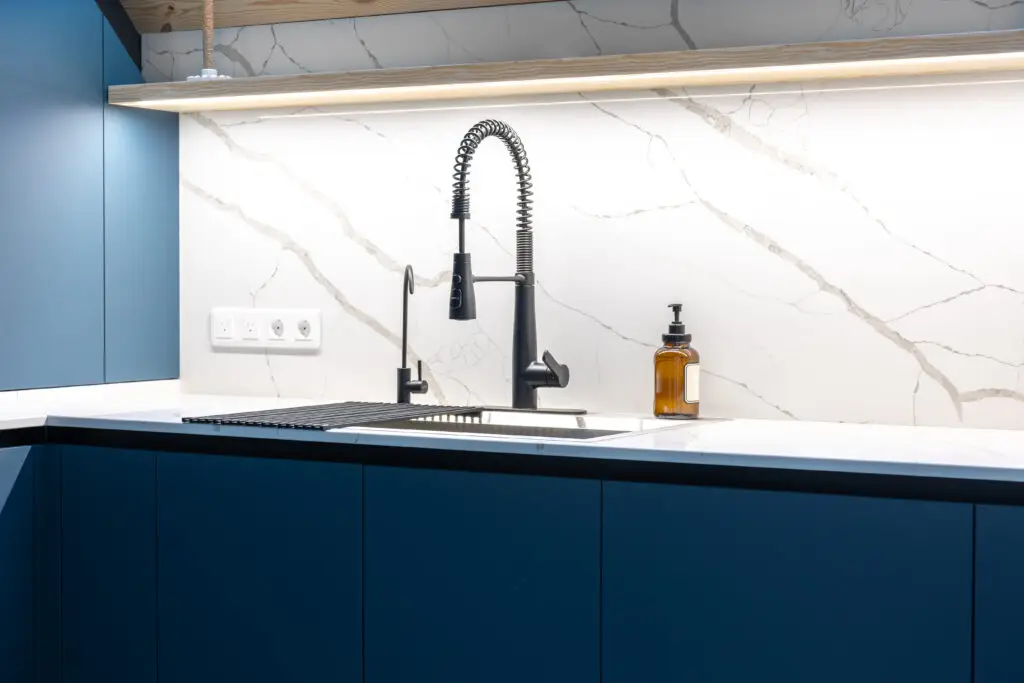
Why White Backsplashes Are So Popular
Light Reflection and Clean Aesthetic
The appeal of white is rooted in its psychological and functional benefits. White surfaces are highly reflective, maximizing natural and artificial light within the kitchen.
- Illumination: A white backsplash, especially in a polished finish, can make a smaller kitchen feel significantly larger and more open by distributing light around the room.
- Perception of Purity: White inherently conveys a sense of cleanliness, purity, and simplicity. In a high-traffic area like the kitchen, this aesthetic provides a comforting, organized, and fresh environment.
- Focal Point Enhancement: While white is a neutral base, it serves to highlight other design elements, such as colorful cabinetry, unique hardware, or statement lighting fixtures, preventing the space from feeling visually cluttered.
Works with Modern, Classic, and Transitional Kitchens
The true power of white lies in its adaptability. It is a universal neutral that transcends specific design eras and styles, making it a safe, long-term investment.
- Modern & Minimalist: In modern kitchens, a seamless white quartz or full-height slab marble backsplash emphasizes clean lines and geometric simplicity.
- Classic & Traditional: Paired with shaker-style cabinets and dark woods, white marble or subway tile establishes an elegant, enduring classical look.
- Transitional: In the most popular style, transitional design, a white backsplash provides the crucial balance, harmonizing traditional elements (like detailed moldings) with modern elements (like sleek hardware) for a look that feels current yet enduring.
Best Materials for a White Kitchen Backsplash
When choosing white, the material selection is vital, as it dictates durability, pattern, and maintenance. Natural stone is often preferred for its depth and unique patterns.
White Marble Backsplash (Carrara, Calacatta Styles)
White marble offers unparalleled sophistication and is the hallmark of luxury design.
- Aesthetics: Carrara marble, with its soft, feathery gray veining, provides a delicate, classic look. Calacatta marble features bolder, more dramatic veining that often includes hints of gold or brown, making it a powerful focal point.
- Natural Movement: The unique, random movement in marble prevents the white surface from feeling sterile, adding organic texture and depth.
- Considerations: As a softer, more porous stone, marble requires dedicated sealing and immediate cleaning to prevent etching and staining, especially against acidic cooking liquids.
Quartz Slab Backsplash for Uniform Look
Quartz is an engineered stone made from natural quartz crystals combined with resins, offering consistent color and superior performance.
- Aesthetics: Ideal for kitchens demanding a flawless, uniform white. Quartz offers absolute consistency in color and minimal veining (or no veining at all, depending on the product).
- Performance: Quartz is non-porous and highly resistant to stains, making it the lowest-maintenance option among white slab materials. It never requires sealing.
- Best Use: The perfect choice for homeowners seeking a contemporary, seamless white aesthetic with maximum practical durability.
White Subway Tile vs Stone Alternatives
While ceramic white subway tile is a popular, cost-effective option, natural stone alternatives offer superior texture and value.
- Stone Tiles: Stone alternatives, such as honed white marble subway tiles or natural limestone, introduce depth and a tactile quality that ceramic lacks. The slight variations in color and texture across natural stone tiles make the installation richer and more sophisticated.
- Impact: Using a natural stone tile elevates the kitchen’s value and visual texture compared to standard ceramic, bridging the gap between a simple tiled look and a full slab.
How to Add Depth to a White Backsplash
Achieving a bright white look without it feeling flat or institutional requires thoughtful design choices regarding pattern, texture, and grout.
Veining Patterns and Stone Movement
For stone slabs, the natural pattern of the movement is the key differentiator.
- Subtle Veining (Carrara): Best for pairing with busy countertops or highly detailed cabinets. The gentle, linear veining provides movement without overwhelming the eye.
- Bold Veining (Calacatta/Quartzite): Excellent for creating a dramatic feature wall, especially when used in a full-height slab format. The strong lines draw the eye and act as abstract art.
- Bookmatching: For the ultimate visual statement, consider bookmatched slabs, where two sequential slabs are opened like a book, creating a symmetrical, mirrored pattern that maximizes the drama of the white stone’s movement.
Texture, Finish, and Grout Choices
The way light interacts with the surface dramatically alters the final look.
- Polished Finish: The most light-reflective finish. It deepens the colors and movement within the stone and gives a glamorous shine. It is the easiest to wipe clean.
- Honed Finish: A matte, softer finish that absorbs light, giving the surface a sophisticated, velvety texture. It hides minor imperfections well but requires more consistent sealing due to the slightly more open pores.
- Grout Choice (Tile Only): The grout color is crucial. Use a white or light gray grout for a monochromatic, minimal look that allows the tile pattern (like herringbone or stack bond) to be subtle. Use a darker gray or black grout for a high-contrast effect, making the pattern pop and emphasizing the individual shape of each white tile.
White Backsplash Maintenance Tips
Maintaining the pristine look of a white backsplash, especially natural stone, requires a proactive approach to prevent discoloration and staining.
Preventing Stains and Discoloration
While a backsplash is less likely to see heavy spills than a countertop, stains can still occur, particularly from splatters near the range.
- Immediate Cleanup: Wipe up highly pigmented or acidic spills (e.g., red wine, coffee, tomato sauce, oils) immediately, especially on marble or other porous white stone.
- Heat Protection: Although a backsplash is generally resistant to standard cooking heat, avoid placing extremely hot pots directly against a slab backsplash, as localized, extreme heat can sometimes damage the seal or the stone’s integrity over time.
- Range Hood Use: Always use the range hood while cooking to minimize the deposition of airborne grease and smoke, which can gradually dull or discolor the sealant over time.
Best Sealers for White Stone
Only impregnating, solvent-based sealers should be used on natural white stone (marble, quartzite). These penetrate the stone and block the pores without changing the surface color.
- Water Test Adherence: Never wait for a visible stain. Perform the water test monthly, especially on white marble, to ensure the seal is intact.
- No Surface Coatings: Avoid topical sealers or waxes, as these can yellow over time, destroying the brilliant white finish you aimed for.
- Professional Application: Ensure the initial sealing is done by a professional during installation, as proper application is key to long-term stain prevention.
FAQs
Do white backsplashes show stains easily?
While white surfaces show contrast with colored liquids more easily than dark ones, a properly sealed white stone backsplash should not stain easily. The non-porous nature of quartz makes it virtually stain-proof. For natural stones like marble, diligent sealing provides a protective barrier, causing liquids to bead up and allowing time for cleanup.
Is marble too delicate for a kitchen backsplash?
No, marble is an excellent choice for a kitchen backsplash. The concerns about marble sensitivity mostly pertain to heavy-use surfaces like countertops, where cutting and constant liquid contact are common. The vertical surface of a backsplash sees far less direct traffic and wear. With professional installation, proper sealing, and adherence to pH-neutral cleaning, marble backsplashes maintain their beauty effortlessly.
Should backsplash match countertops?
This is a matter of design preference, but there is no rule requiring a match.
- Matching: A full slab matching the countertop creates a seamless, modern, and high-end look that is trending in luxury design.
- Contrasting: A contrasting backsplash (e.g., a simple white backsplash with a dark gray or busy countertop) can be used to break up the color palate, allow the countertop to be the star, and add visual interest through texture or pattern.
Ready to select the perfect white stone slab or tile for your kitchen’s stunning backdrop?
JRL Granite & Marble specializes in sourcing and fabricating the finest white marbles, quartzites, and quartz for backsplashes that combine clean design with enduring quality. Let us help you achieve the bright, timeless kitchen you’ve always wanted.
Contact JRL Granite & Marble today to explore our full selection of white stones.