
Marble stair treads are the ultimate statement of luxury and classic design. Whether used in a grand residential foyer or a sophisticated commercial lobby, marble introduces a polished, reflective beauty that instantly elevates the space. Unlike other materials, marble’s unique veining and luminous quality create a sense of movement and artistry underfoot.
At JRL Granite & Marble, we provide expert fabrication services for marble staircases, ensuring that every tread is precisely cut, finished, and installed to meet the highest standards of safety and aesthetic excellence.
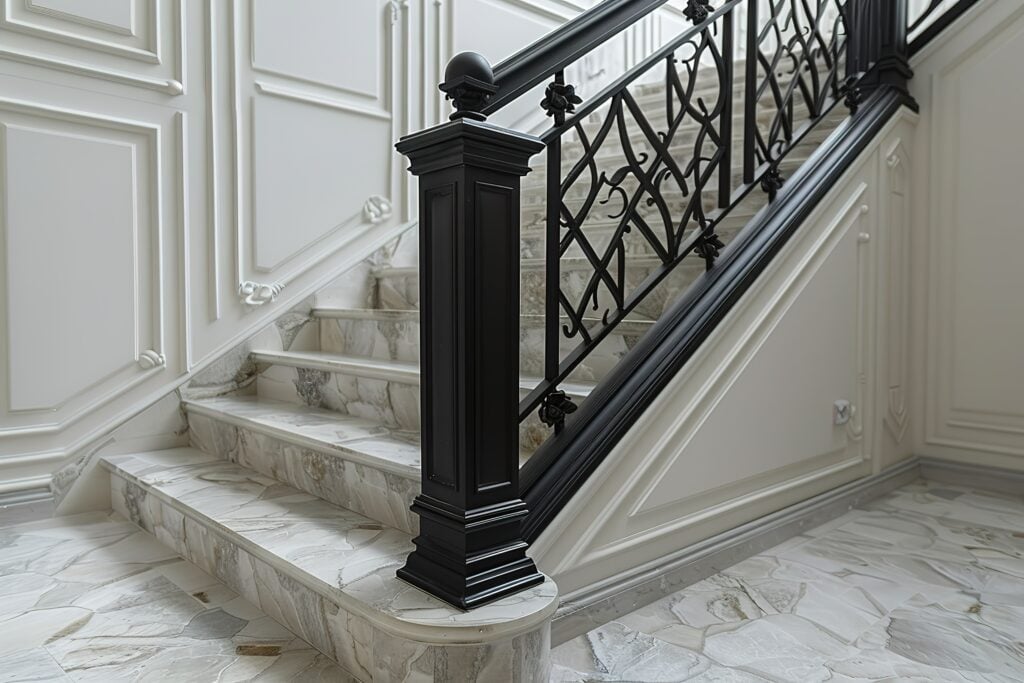
Why Marble Is a Popular Choice for Staircases
Marble is chosen not just for its beauty but for the lasting value it imparts to a property.
Luxurious Aesthetic
Marble is synonymous with high-end architecture and classical design. The soft, luminous nature of the stone and its organic, often dramatic veining patterns offer a level of visual sophistication that cannot be replicated by engineered or synthetic materials. The reflective surface catches light, enhancing the sense of space and grandeur.
Long-Lasting Material
While softer than granite or quartzite, marble is highly durable against compression and steady foot traffic. With appropriate maintenance and protection from severe impacts, a marble staircase will last for decades, maintaining its beauty far longer than carpeted or wood treads.
Enhances Home Value
Installing natural marble flooring and stair treads is one of the most effective ways to significantly boost a property’s perceived value and appeal. Marble is universally recognized as a premium upgrade that appeals instantly to luxury buyers.
Types of Marble Stair Treads
The type of marble selected dictates the color, veining intensity, and overall mood of the staircase.
Carrara Marble
- Aesthetic: The most traditional Italian marble. It features a predominantly white or light gray background with fine, feathery gray veining that is generally softer and more subtle.
- Best For: Classic, subtle, and bright interiors.
Calacatta Marble
- Aesthetic: Highly luxurious, featuring a stark white background and thick, dramatic, well-defined veins that can range from gold to dark gray. It is rarer and typically more expensive than Carrara.
- Best For: Statement staircases and high-end, contemporary designs.
Crema Marfil
- Aesthetic: A warm, creamy beige marble with minimal, light-colored veining. It provides a soft, inviting atmosphere and pairs beautifully with dark wood trim.
- Best For: Traditional designs where warmth and neutrality are key.
Statuario
- Aesthetic: Similar to Calacatta but often featuring even bolder, more pronounced gray or black veining on an exceptionally white background. Highly coveted for a luxurious, high-contrast look.
- Best For: Modern or minimalist designs where the staircase is the art piece.
Design Options
Fabrication options are key to ensuring both the beauty and the safety of a marble staircase.
Polished vs. Honed
- Polished: High-gloss, highly reflective. Maximizes the richness of the stone but is inherently more slippery.
- Honed: Matte finish, non-reflective. Offers a softer, more contemporary look and provides slightly better traction.
Nosing Styles (Bullnose, Eased, Beveled)
The nosing is the edge of the tread that overhangs the riser.
- Bullnose: A fully rounded edge, which is popular for a traditional look and offers the safest, smoothest edge transition.
- Eased: A square edge with slightly rounded corners, offering a crisp, clean, contemporary profile.
- Beveled: A 45-degree angle cut, adding an architectural detail.
Integrated Risers vs. Contrasting Materials
Marble treads can be paired with marble risers for a seamless, continuous look. Alternatively, a contrasting riser material (such as dark wood or painted white drywall) can be used to make the marble treads stand out dramatically.
Maintenance & Care Tips
Due to its porous and calcium-rich composition, marble requires diligent maintenance.
Preventing Scratches
Marble is a relatively soft stone and can be scratched by abrasive dirt or sharp objects. Place entryway rugs at the base of the staircase to catch debris. Clean regularly with a soft mop or cloth.
Protecting Against Etching
Marble is susceptible to etching—dull marks left by acid. Any spill, including wine, soda, lemon juice, or even some common floor cleaners, can etch the surface. The best defense is immediate cleanup with a soft, dry towel.
Sealing Schedule
Marble is highly porous and must be sealed regularly. We recommend applying a high-quality penetrating stone sealer every 6 to 12 months to significantly reduce the rate of absorption and minimize staining risks.
Installation & Cost
Marble treads are custom-fabricated elements that require specialized skill for measurement and installation.
Cost Per Step
The cost for marble stair treads is typically calculated per step or linear foot and is significantly higher than standard flooring due to the complexity of fabrication and the luxury material. The average installed cost will vary based on the marble type (e.g., Calacatta is more costly than Carrara) and the complexity of the nosing chosen.
Professional Installation Advice
Due to the weight, fragility during transport, and the necessity for perfect leveling and precise adherence to the sub-structure, marble treads must be installed by experienced stone professionals. Incorrect leveling or improper adhesion can lead to cracking and safety issues.
Indoor vs. Outdoor Considerations
Marble is generally not recommended for exterior applications in climates that experience freezing temperatures, as water absorption can lead to cracking. It is primarily an interior stone, offering exceptional beauty in foyers, halls, and grand interior staircases.
FAQs
“Is marble too slippery for stairs?”
Polished marble can be slippery, especially when wet or polished. For safety, it is highly recommended to choose a honed (matte) finish for stair treads. Alternatively, if a polished finish is desired, integrate anti-slip features such as recessed sandblasted strips or non-slip adhesive strips near the nosing edge.
“Does marble crack easily?”
Marble is softer and more brittle than granite, meaning it can crack under high-impact stress (such as dropping a heavy object on a corner) or if it is installed over an uneven or poorly supported substrate. However, when installed professionally over a solid structure, it provides long-term stability.
“How often should marble be sealed?”
Marble should be sealed every 6 to 12 months. Due to the high foot traffic on stairs, which accelerates wear on the sealant, frequent reapplication is essential to protect the stone from stains and moisture ingress.
Ready to bring the unmatched elegance of marble to your staircase?
Contact JRL Granite & Marble today for a private consultation on selecting and fabricating your custom marble stair treads.