
Choosing marble countertops goes beyond selecting a material; it is about choosing a natural piece of art whose color, veining, and texture dictate the mood of your entire room. From classic white to dramatic black, the color of your marble slab is the most important decision influencing the final look and feel of your kitchen or bathroom.
Why Color Choice Matters in Marble Countertops
The color you select for your marble countertop is a foundational design choice that affects multiple aspects of your space.
Impacts Mood, Lighting, and Design Harmony
- Mood: Lighter marbles (like white and light gray) evoke feelings of cleanliness, airiness, and calm, contributing to a contemporary or traditional European aesthetic. Darker marbles (black, deep green) create drama, intimacy, and a sense of grounding, often fitting perfectly into modern or industrial designs.
- Lighting: Dark marbles absorb light, requiring more deliberate and layered lighting schemes to prevent the room from feeling dim. White marbles maximize natural and artificial light, making small spaces feel expansive.
- Design Harmony: The marble’s background color and the veining colors must complement the fixed elements of the room—your cabinetry, flooring, and wall paint—to achieve a cohesive and professional design.
Most Popular Marble Colors
While marble is a natural stone with infinite variation, most popular selections fall into distinct color categories, each offering a unique character.
White – Timeless and Versatile
White marble is the perennial favorite, epitomized by varieties like Carrara, Calacatta, and Thassos.
- Characteristics: Varies from a true pure white (Thassos) to a creamy, soft white (Carrara). The veining usually ranges from light gray to dark gray, sometimes with hints of gold or beige.
- Best Used For: Achieving a clean, classic, and bright kitchen look. It pairs beautifully with any cabinet color, from bright white to navy blue.
Black – Bold and Modern
Black marbles, such as Nero Marquina or Black Levadia, are incredibly dramatic and are often used as focal points.
- Characteristics: Features a deep black or charcoal gray background with sharp, contrasting white or gray veining.
- Best Used For: Contemporary kitchens seeking high contrast. A black marble island with white perimeter counters creates a sophisticated, multi-layered design.
Gray – Subtle and Elegant
Gray marble offers a beautiful middle ground, providing more character and warmth than pure white while remaining light and neutral. Varieties include Bardiglio and various subtle gray-toned Carraras.
- Characteristics: Ranges from dove gray to deep charcoal, often with white or cream veining that blends seamlessly into the background.
- Best Used For: Adding depth and avoiding the clinical feel of all-white kitchens. Gray works exceptionally well with natural wood cabinetry (oak, walnut) and industrial design elements.
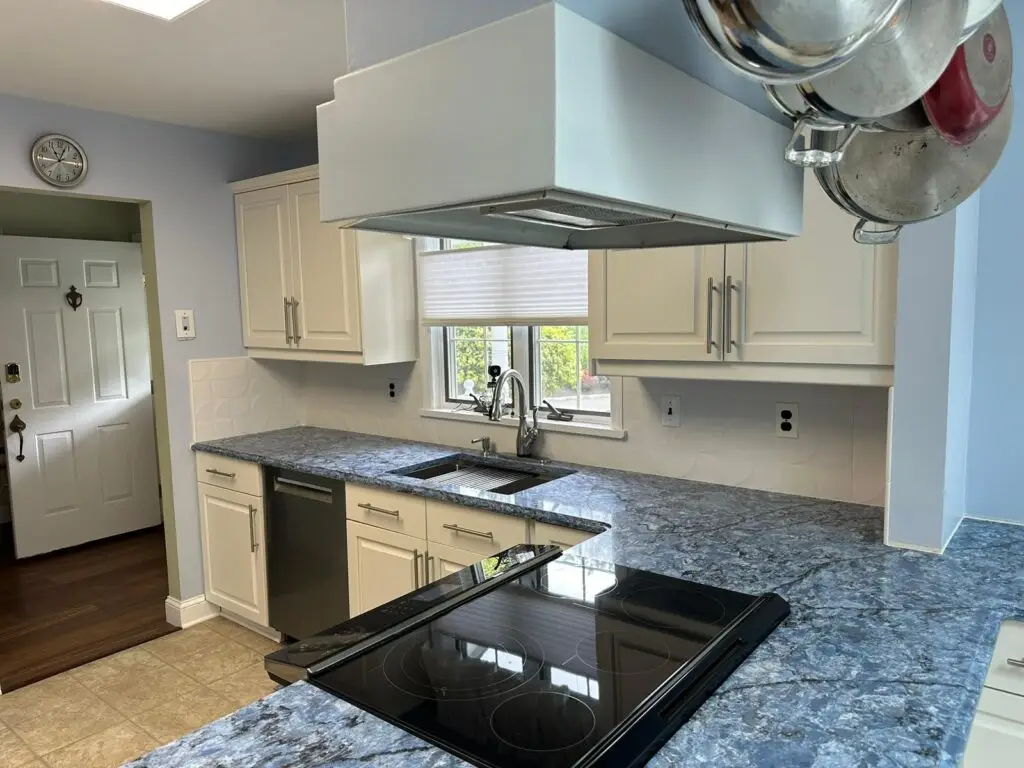
Green and Blue – Unique Statement Tones
Less common but highly impactful, colored marbles are perfect for homeowners looking to make a unique design statement.
- Characteristics: Deep greens (like Verde Antigua or Indian Green) and blues often feature complex, multi-colored veining, incorporating gold, brown, and white.
- Best Used For: Powder room vanities, statement fireplace surrounds, or as a small, dramatic insert on a hutch or bar area where a touch of unexpected color is desired.
Choosing the Right Color for Your Home
Selecting the perfect marble requires considering the existing fixed elements and the environmental factors of your space.
Match Countertop Tone with Cabinet and Floor Color
The relationship between your cabinets and countertops is the most critical factor:
- Monochromatic: Pairing white marble with white or light gray cabinets offers a seamless, cohesive, and tranquil look.
- High Contrast: Using black or deep gray marble with white cabinets, or white marble with dark wood or navy cabinets, creates visual excitement and defines the architectural lines of the room.
- Harmonious Match: If your floor has warm, brown tones, look for marble veins that include beige or gold (e.g., Calacatta Gold) to tie the lower and upper portions of the room together.
Consider Natural vs. Artificial Lighting
Visit the stone yard (or view the samples) multiple times, under different lighting conditions:
- Natural Light: Marble’s appearance can change drastically based on sunlight exposure. A gray marble may appear warmer in morning light and cooler in afternoon light.
- Artificial Light (Your Kitchen’s Lighting): Since most kitchen work occurs under task lighting, ensure the marble’s color remains beautiful and true under the specific color temperature (measured in Kelvin) of your planned LED fixtures. A warmer (3000K) light will enhance golds and browns, while a cooler (4000K) light will emphasize the gray and white tones.
Maintenance and Durability by Color
While all marble requires the same fundamental care, the color can significantly impact the visual effect of normal wear and tear.
How Darker Shades Hide Stains Better
Darker marbles, particularly black and deep gray varieties, are often favored by those concerned about staining.
- Hiding Etching: The biggest advantage of dark marble is its ability to hide etching (the dull spots caused by acid contact). On a dark, polished surface, white etch marks become highly visible. However, opting for a honed (matte) finish on dark marble makes etching far less noticeable than on a polished finish.
- Hiding Stains: Any stone is susceptible to stains if not properly sealed, but dark marbles naturally conceal light watermarks, coffee rings, or minor stains more effectively than pristine white surfaces.
When to Reseal for Long-Term Protection
Regardless of color, all marble must be sealed to minimize its porosity and protect against liquids.
- Testing Method: Periodically place a few drops of water on your counter. If the water quickly absorbs and leaves a dark spot, the stone needs immediate resealing. If the water beads on the surface for several minutes, the sealant is still working.
- Recommended Interval: Most residential kitchens benefit from professional resealing every 6 to 12 months using a high-quality impregnating sealer.
FAQs
Which marble color is easiest to maintain?
While maintenance is about sealing and cleaning technique, a light gray or heavily patterned white marble (like a busy Calacatta) tends to be the most forgiving visually. The natural variation and pattern in the veining act as camouflage, making minor etchings, crumbs, and everyday wear less obvious than on a uniform, pure white slab. A honed (matte) finish also hides wear better than a polished finish.
What’s trending in marble countertop design?
The current trend favors bold statements and unique veining:
- High-Contrast Veining: Marbles with dramatic, thick, dark veining against a bright white background (e.g., Calacatta Gold or Statuario).
- Honed Finishes: Moving away from high-gloss, many homeowners are opting for a matte or “honed” finish, which offers a soft, elegant appearance and is better at disguising etching.
- Colored Marbles: A resurgence of interest in dramatic colors like deep green and blue marble for secondary spaces (bar areas, islands, or laundry rooms) to add an unexpected pop of rich color.